
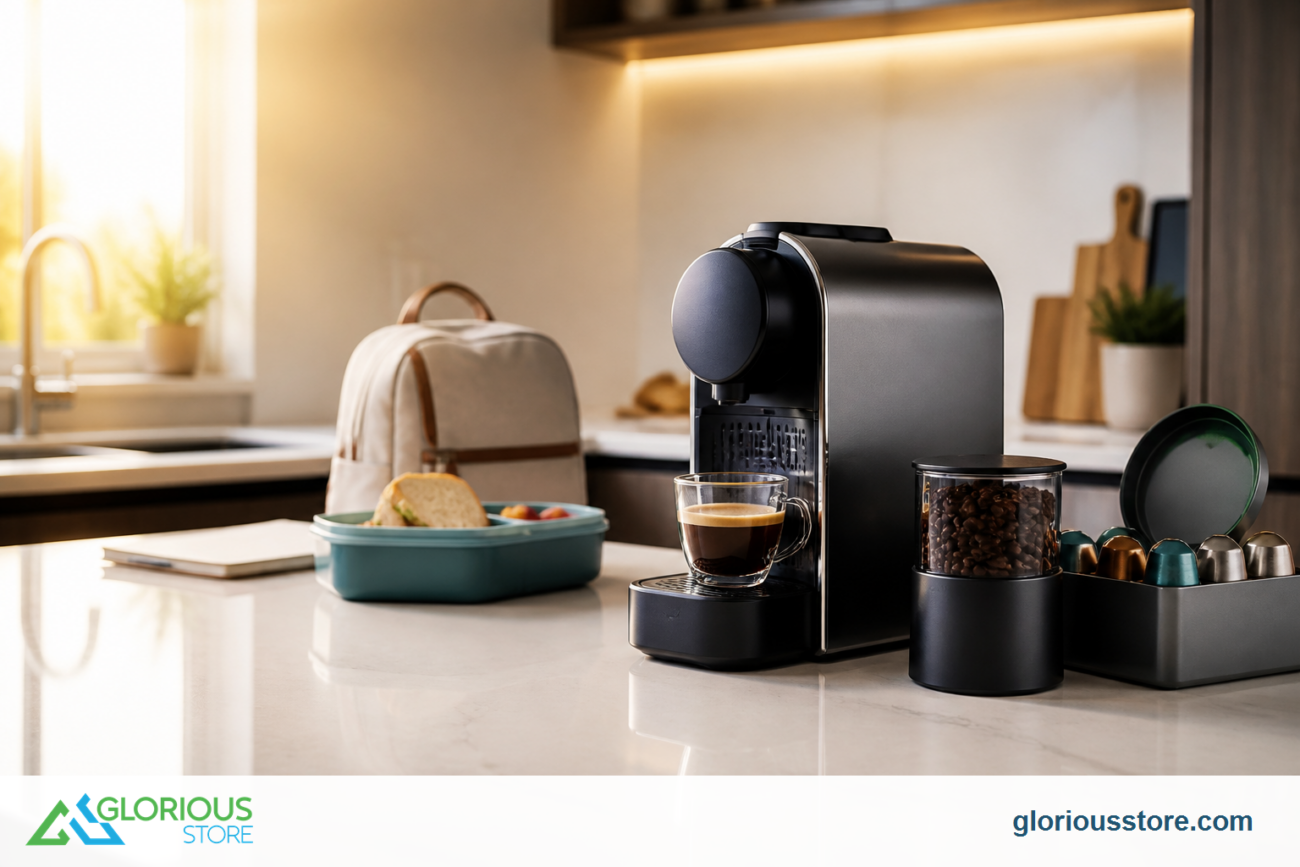
When mornings become more structured, the best coffee setup is not necessarily the machine with the longest feature list. It is the one that fits the time, counter space, drink preferences, and cleanup you can manage before leaving home. Comparing an espresso machine with grinder vs pods is therefore less about declaring one format universally better and more about choosing the workflow you will actually use.
The timing is relevant across the UAE. The Ministry of Education’s calendar says students in public schools and private schools following the Ministry curriculum begin the 2026–2027 academic year on August 31, 2026. Other private-school calendars can differ, but mid-August is a sensible point for households to simplify breakfast and coffee routines before the school run returns.
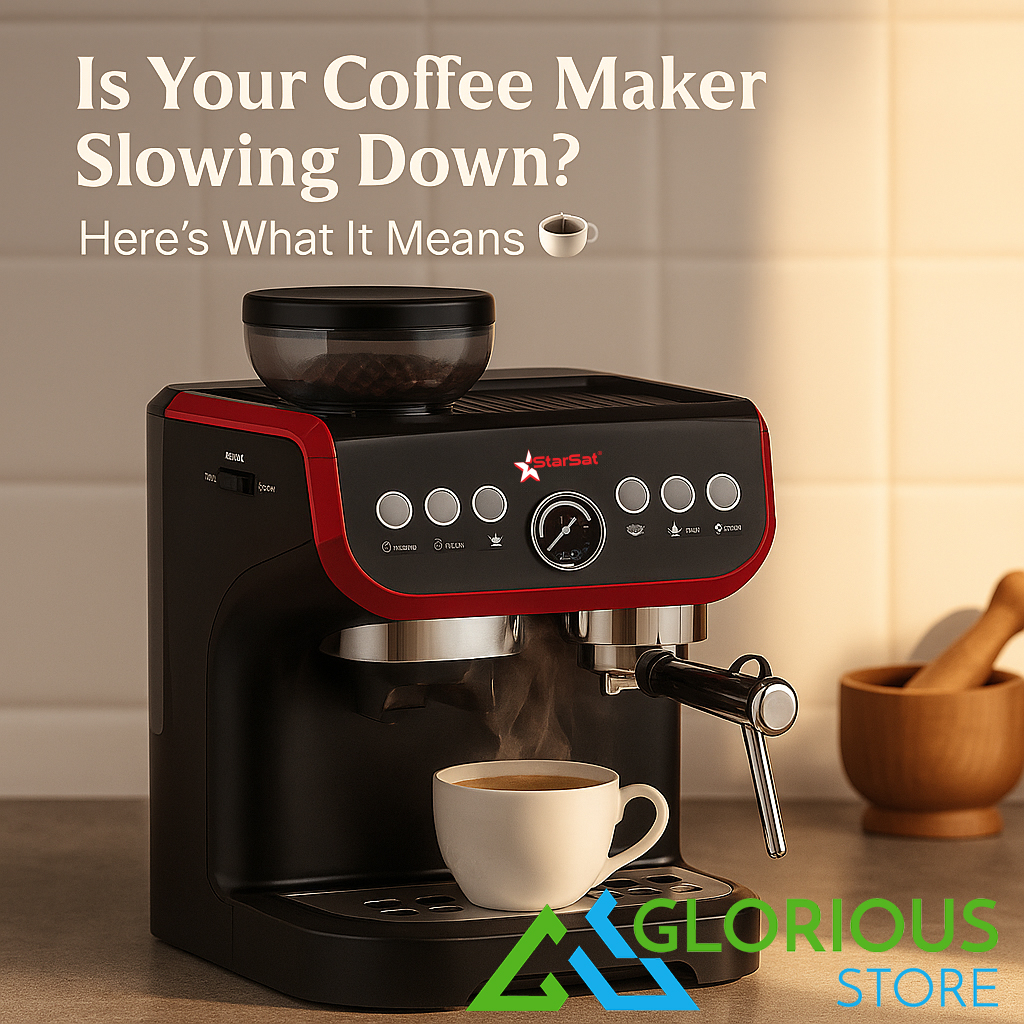
Two current StarSat machines illustrate the choice. The PrecisionGrind AC-517EA combines a built-in adjustable grinder with espresso and milk-drink functions. The more compact ST-697B accepts ground coffee and compatible pods. Both were available on the Glorious Store website when checked on August 15, 2026, but their stock levels, capacities, and daily routines are quite different.
The Short Answer: Fresh-Ground Control or Faster Changeovers
Choose a machine with a built-in grinder if you want to start with whole beans, adjust the grind, and keep the main preparation tools in one appliance. It suits a household that values experimenting with espresso and regularly prepares cappuccino or latte drinks.
Choose a ground-coffee-and-pod machine if you value a smaller footprint, quick flavor changes, and fewer loose grounds during a rushed morning. Pods can be convenient, while ground coffee still leaves room to use a preferred roast. Compatibility matters, so check the live product details and the pod format before buying supplies.

The Specialty Coffee Association describes espresso preparation through variables such as dose, beverage yield, time, temperature, pressure, and grind. Its survey of barista practice found that weighing output and using an approximately 1:2 beverage ratio were common. That does not mean every home must copy a competition recipe. It does show why grind adjustment and consistent dosing matter more to cup results than a large pump-pressure number on its own.
What a Built-In Grinder Changes
A built-in grinder reduces the need for a separate appliance and keeps beans close to the brewing path. With the StarSat PrecisionGrind Espresso Master AC-517EA, the current listing identifies an adjustable coffee mill, a 19-bar pump rating, a 2-liter transparent water tank, milk frothing, a stainless-steel drip tray, auto shut-off, and 1,450-watt power.
The live page showed 20 units in stock on August 15, 2026. Inventory and pricing can change, so treat that as a dated check rather than a guarantee.
Where the grinder model fits best
- You normally buy whole beans and want to adjust the grind as beans age or change.
- More than one adult drinks coffee each morning, making the 2-liter tank useful.
- Cappuccino and latte preparation are regular, not occasional, parts of the routine.
- You have enough counter depth and clearance to refill the hopper and tank.
- You are willing to wipe the steam nozzle and clear loose grounds after use.
Freshly grinding only what you need can preserve more aroma than leaving coffee pre-ground for long periods. However, an integrated grinder does not remove the learning curve. The first shots may need adjustment. Change only one variable at a time—grind setting, dose, or beverage yield—so you can understand what improved the cup.
The grinder model is also the heavier and larger option in the current listings: the page gives dimensions of 36 × 36 × 48 centimeters and a weight of 7.8 kilograms. Measure the real counter, including overhead cabinets. Do not assume the machine will fit because its width looks manageable in a photo.
What Ground Coffee and Pods Change
The StarSat Espresso Master ST-697B takes a different approach. Its listing says it works with ground coffee and Nespresso-format pods, and includes a 19-bar pump rating, pressure gauge, detachable frothing nozzle, 1-liter removable tank, die-cast aluminum boiler, and illuminated controls.
The live product page showed only 1 unit in stock on August 15, 2026. Because that is a low-stock claim, recheck the page immediately before purchase rather than relying on this article.
Where the pod-compatible model fits best
- You want to switch between decaf and regular coffee without emptying a bean hopper.
- Different adults prefer different pod flavors or strengths.
- The morning priority is a repeatable drink with limited measuring and cleanup.
- Counter space is tight; the listed footprint is 35 × 18.5 × 34 centimeters.
- You still want the option to use ground coffee and froth milk.
Pods are convenient, but they add a compatibility and waste consideration. Confirm the supported format, store capsules as directed, and dispose of used pods according to the material and local recycling options. Ground coffee may be the simpler long-term route if you already own a grinder or buy small quantities from a local roaster.
Side-by-Side Buying Guide
| Decision point | Built-in grinder: AC-517EA | Ground coffee and pods: ST-697B |
|---|---|---|
| Best for | Whole-bean control and regular milk drinks | Quick changeovers and a narrower counter |
| Coffee input | Whole beans through the built-in grinder | Ground coffee or compatible pods |
| Water tank | Listed at 2 L | Listed at 1 L |
| Milk system | Milk frother | Detachable frothing nozzle |
| Listed size | 36 × 36 × 48 cm | 35 × 18.5 × 34 cm |
| Stock checked Aug. 15, 2026 | 20 units | 1 unit |
| Main daily task | Dial in grind and clear grounds | Refill pods/grounds and empty used material |
Neither machine should be selected on the 19-bar pump rating alone. The SCA material on espresso emphasizes the combined effect of grind, dose, yield, time, temperature, and pressure. At home, repeatable preparation, fresh inputs, and cleaning habits are more useful comparison points than treating one specification as a quality score.
Build a Five-Minute Morning Station
The easiest way to save time is to move decisions to the evening. Keep the machine in a ventilated location near a suitable outlet, without trapping the cable under the appliance. Follow the manufacturer’s instructions for filling, heating, cleaning, and descaling.

- Refill the water tank with fresh water to the appropriate level.
- For the grinder model, add only enough beans for the near term and close the hopper. For the pod model, organize compatible options in a small tray.
- Put clean cups, the frothing pitcher, and a cloth within reach.
- Decide the first drink before bed—espresso, cappuccino, latte, regular, or decaf.
- After brewing, purge and wipe the milk nozzle, empty the drip area as needed, and leave the station ready for the next user.
Do not let advance preparation compromise food safety. Refrigerated milk should remain cold until use, and any cleaning schedule must follow the appliance instructions. Never leave a hot machine where children can reach the controls, cup, steam nozzle, or power cable.
How to Avoid a Bad Fit in a UAE Kitchen
First, measure the counter in three dimensions. Leave room to remove the tank, open the bean hopper, load coffee, and lift cups away from the drip tray. Check cabinet doors and wall shelves. A machine can fit the footprint but still be awkward to refill.
Second, decide who will maintain it. Milk systems need prompt cleaning, and mineral scale can affect water flow and heating over time. Use the maintenance method and products specified by the manufacturer. If several people use the machine, a simple shared rule—rinse after every milk drink and perform the scheduled clean on one fixed day—prevents confusion.
Third, choose the coffee input you already enjoy. Do not buy a grinder model if everyone prefers the simplicity of pods. Do not buy a pod-compatible model expecting it to provide the same adjustment range as a bean-to-cup workflow. The best match is the routine that survives the busiest weekday.
Browse the current Glorious Store coffee-machine collection to compare availability and current pricing. Product details can change, so confirm dimensions, accessories, pod compatibility, electrical requirements, warranty terms, and delivery information on the live page before ordering.
Frequently Asked Questions
Is an espresso machine with a grinder better than a pod machine?
It offers more control over whole-bean grinding and can reduce the need for a separate grinder, but it also needs adjustment and cleanup. A pod-compatible machine can be faster to switch between drinks and easier on a narrow counter. “Better” depends on the workflow you will maintain.
Can the ST-697B use both pods and ground coffee?
The current Glorious Store listing says it is compatible with ground coffee and Nespresso-format pods. Recheck the live page and supplied accessories before buying capsules because product details can change.
Does 19-bar pressure guarantee better espresso?
No. It is a pump specification, not a complete quality score. Grind, dose, beverage yield, temperature, time, freshness, and maintenance all affect the result.
Which machine suits several daily milk drinks?
The AC-517EA is the stronger fit on paper because it combines a grinder, a milk frother, and a listed 2-liter tank. Confirm that its larger dimensions fit the counter and that the household will clean the milk system consistently.
Choose the Routine Before the Machine
For households preparing for the UAE school return, the decision is practical. Choose the AC-517EA when whole-bean control, a built-in grinder, and a larger tank justify the extra counter space. Choose the ST-697B when a narrower footprint, ground-coffee flexibility, and compatible pod convenience matter more—while remembering that only one unit was shown in stock at the time of checking.
Recheck the live product page before purchase. If you are still deciding, note how many drinks the household makes, whether they are milk-based, the available counter dimensions, and whether speed or adjustment matters more. Those four answers will usually make the choice clearer than any single headline specification.
Sources
- UAE Ministry of Education, “Ministry of Education announces the academic calendar for the next three years”, published February 23, 2026; checked August 15, 2026.
- Specialty Coffee Association, “Defining the Ever-Changing Espresso”, checked August 15, 2026.
- Glorious Store live AC-517EA product, ST-697B product, and coffee-machine collection pages, checked August 15, 2026.




Leave a comment