
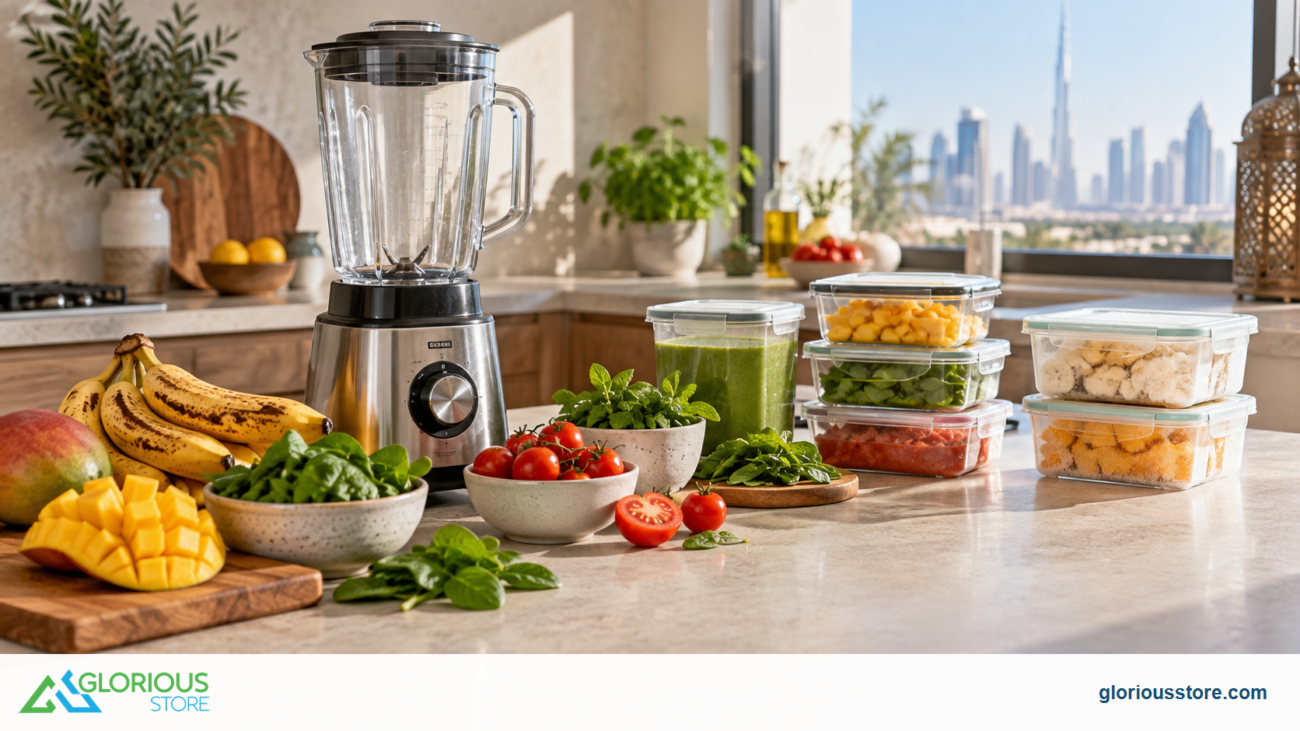
A kitchen blender can help a UAE household use safe, ripe ingredients before their quality declines, but only when it fits a real routine. The useful question is whether you will notice what needs using, prepare an appropriate portion, store it safely and clean the equipment promptly.
That makes this a timely subject. The United Nations Environment Programme and the Food and Agriculture Organization will mark the seventh International Day of Awareness of Food Loss and Waste on September 29, 2026. This year’s theme focuses on the transformative potential of reducing food loss and waste. In the UAE, the national ne’ma initiative aims to help halve food loss and waste by 2030 through better habits and coordinated action.
This guide turns that large goal into a modest kitchen system: use now, chill, or freeze. It also explains where the current StarSat SS-B700 2-in-1 Blender may fit. Its live Glorious Store page showed six units in stock when checked on September 15, 2026. Inventory can change, so recheck the listing before ordering.
Start with a three-lane food check
Before choosing a recipe, look at the ingredients you already have. A crowded blender jar is not a waste-reduction plan; a clear decision for each food item is.
Use now is for safe, edible produce that is ripe and likely to lose texture soon. A sound spotted banana, soft mango, fresh-smelling herbs or a ripe tomato may work in a smoothie, sauce, soup base or dip.
Chill is for prepared ingredients you expect to use soon and can refrigerate safely in a clean, covered container. Cut produce is perishable, so label the container with its preparation date and keep it visible.
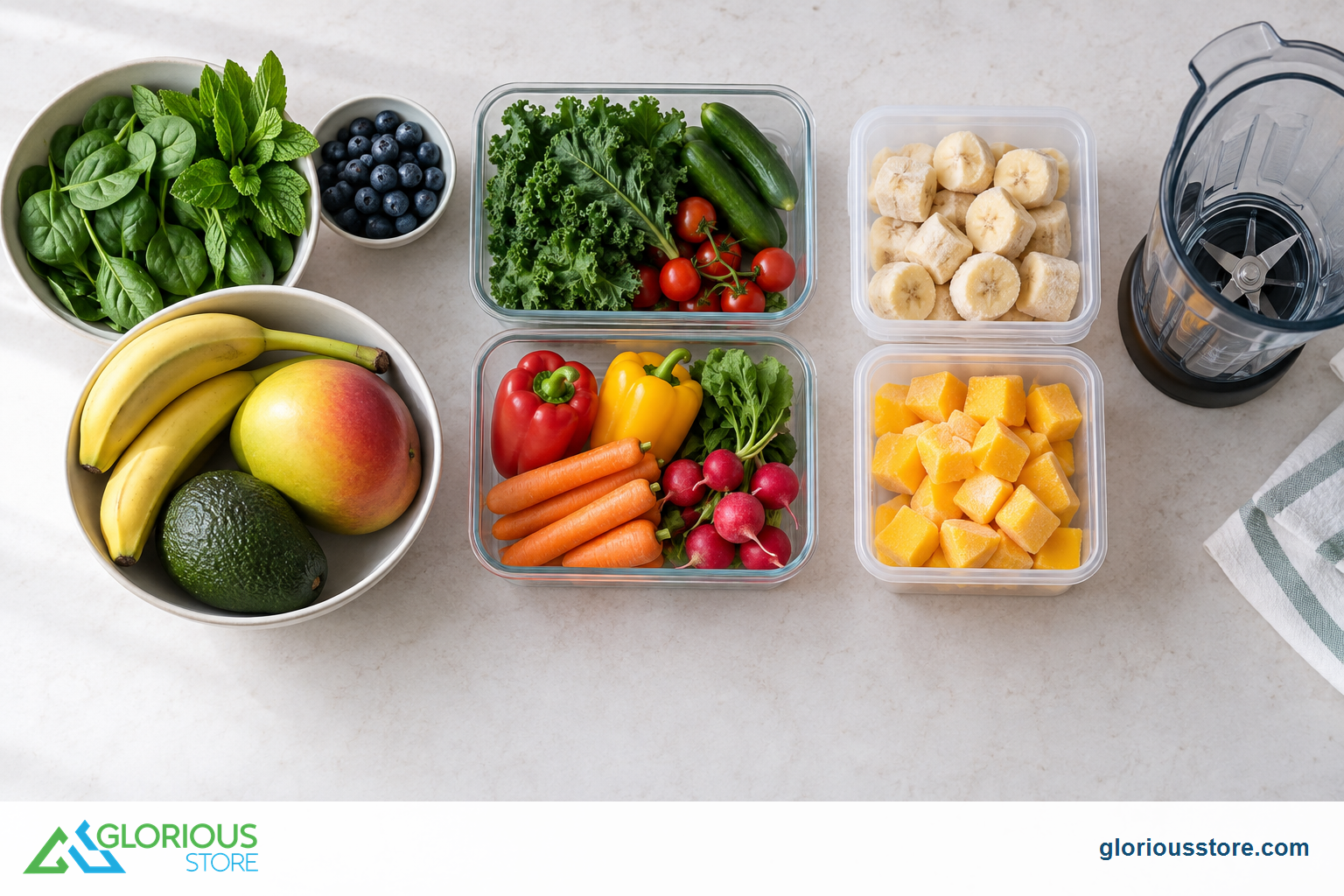
Freeze is for suitable food that you will not use quickly. Portioning before freezing is usually more practical than freezing one solid block. Freezing preserves food by slowing microbial activity; it does not make spoiled food safe and it does not destroy every microorganism. Handle thawed ingredients as perishable food.
When not to blend it
Blending is not a rescue method for rotten, moldy or questionably stored food. The US Food and Drug Administration advises consumers to cut away damaged or bruised areas from otherwise sound produce and throw away produce that looks rotten. If an ingredient has an unknown storage history, an off odor, visible mold, sliminess or other spoilage signs, do not hide the problem in a smoothie or sauce.
Keep raw produce separate from raw meat, poultry and seafood and from the utensils used for them. Wash hands and food-contact surfaces, then rinse produce under running water before cutting or blending. The FDA does not recommend washing produce with soap, detergent or commercial produce wash.
What a blender can—and cannot—do for waste reduction
A blender is useful when texture is the reason safe food might otherwise be ignored. Ripe fruit can become a smoothie component; herbs can become a sauce; and safely handled cooked vegetables can become a soup base.
However, the machine does not extend a food’s safe life by itself. It also does not replace refrigeration, freezing, covered storage or sensible portions. Making two liters of smoothie when the household will drink two glasses simply changes the form of the excess.
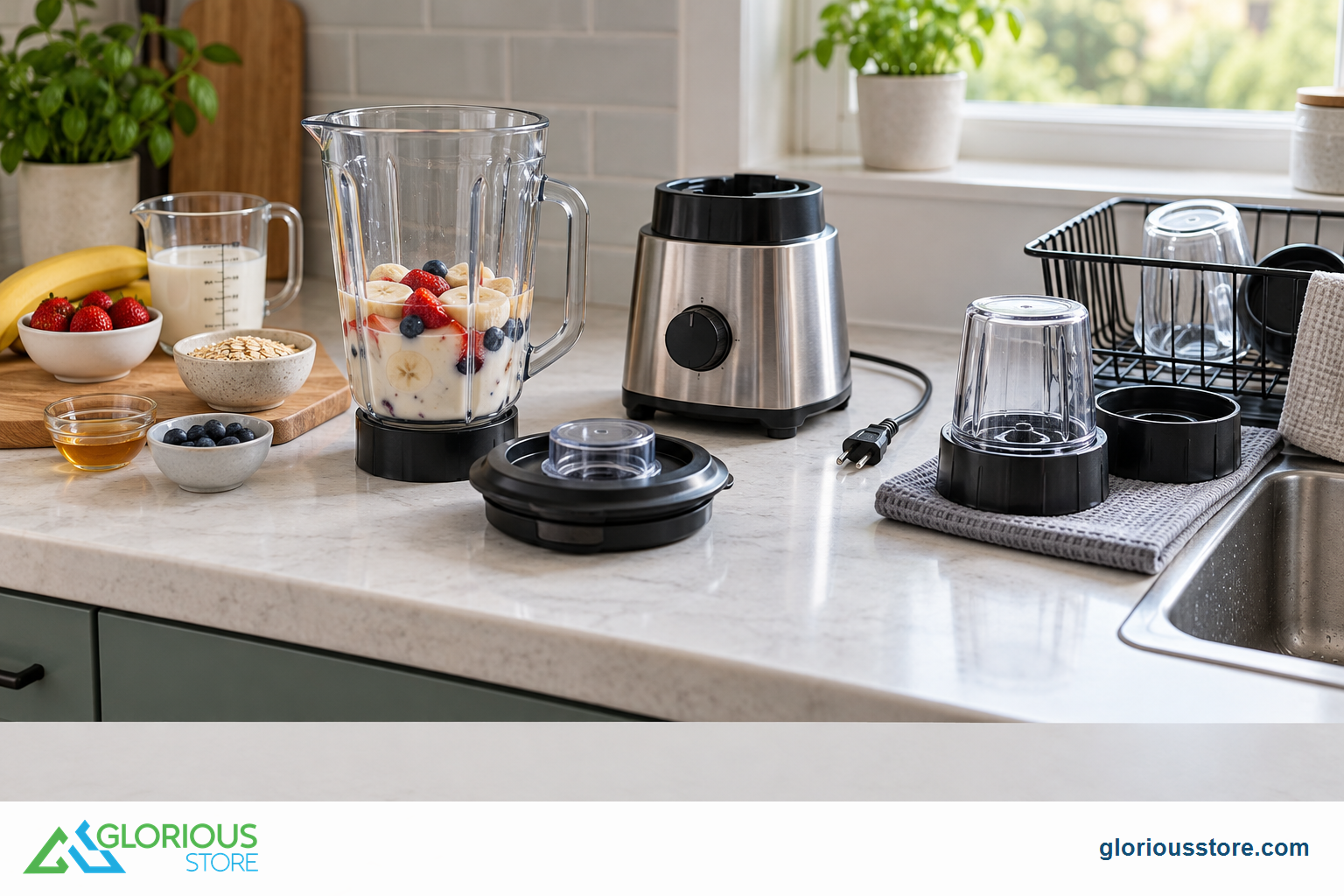
Plan from the serving backward. Decide how many portions you need, measure the ingredients and blend only that amount. Keep the remainder whole or properly stored. Use the mill jar only for foods and methods permitted by the instructions.
Match the appliance to the real kitchen
The SS-B700 listing describes a 350W copper motor, 1.6-liter main jar, separate mill jar, adjustable speed control, stainless-steel blades, BPA-free transparent containers, safety interlock and anti-slip base. Those are useful decision points, not a promise that the appliance can process every hard, hot or frozen ingredient.
The listed 1.6-liter jar may suit family portions, but usable capacity can be lower than the headline volume. Leave the required clearance, fit the lid correctly and avoid overfilling. Do not assume it handles boiling liquids, large ice cubes, bones, very hard spices or long runs unless the manual says so.
The mill jar adds flexibility for smaller preparations, but it is not necessarily a universal grinder. Confirm supported ingredients, quantities and operating times. If nut butter, coffee grinding or ice crushing is essential, ask Glorious Store about the exact model.
The product page gives dimensions of 18.5 × 19.5 × 38.3 centimeters and a weight of 1.85 kilograms. Measure the counter and the space below cabinets, including room to remove the lid and lift the jar. Position the base on a dry, stable surface near a suitable outlet, with the cable away from heat, water and walkways.
A seven-minute use-now prep routine
The most effective routine is simple enough to repeat after grocery shopping or before the weekly bin day.
- Scan the refrigerator and fruit bowl. Put safe ingredients that need attention in one visible place.
- Choose one result. Decide on a smoothie, sauce, dip or soup base before loading anything.
- Check safety and quality. Discard rotten food. Trim only minor damage from otherwise sound produce.
- Wash correctly. Rinse produce under running water; clean hands, boards, knives and the counter.
- Portion for today. Estimate the number of servings and keep the batch modest.
- Store the remainder. Cover and refrigerate prepared items, or freeze suitable portions while they are still in good condition.
- Clean immediately. Unplug the base, follow the manual for disassembly, wash removable parts safely and let them dry fully.
This routine makes the blender the final step in a decision process, not the first reaction to an overfilled refrigerator.
Four practical ways to use safe ripe ingredients
Smoothie packs without oversized batches
Portion suitable washed fruit before freezing so you can take out one batch. Do not freeze food to disguise spoilage or assume the blender can process a jar packed with solid frozen pieces; follow the manual.
Tomato and herb sauce bases
Ripe tomatoes and sound herbs can become a sauce base. Use clean equipment and a safe recipe, then cook promptly or store the result safely instead of leaving the jar on the counter.
Small-batch dips and dressings
Make a smaller amount by starting with the number of diners. Stop and unplug the machine before scraping the sides or adjusting ingredients.
Crumb and seasoning preparation
The mill jar may help with small quantities of compatible dry ingredients. Avoid unsupported foods, overloading and runs longer than recommended.
Use the freezer as a planning tool
FoodSafety.gov recommends checking the refrigerator often, eating or freezing items before they need to be thrown away, and storing refrigerated foods in covered containers or sealed bags. A weekly inventory can be as simple as one “use first” box at eye level.
Freeze food while it is still safe and of good quality. The US Department of Agriculture notes that quality at the time of freezing affects the result after thawing. Label portions with the food and date, keep the freezer at its recommended temperature and use an authoritative storage guide such as FoodKeeper for the specific ingredient.
Not every blended mixture freezes well. Dairy can separate, herbs can darken and some vegetables change texture. Test a small portion before committing a full batch. The goal is a future ingredient you will actually use, not a freezer archive.
A quick SS-B700 buying checklist
Use the live product page as the controlling source and confirm any point essential to your routine.
| Check | Why it matters |
|---|---|
| 1.6L main jar | Compare with your normal serving count, not the largest batch you can imagine. |
| 350W listed motor | Treat wattage as one specification; ingredient hardness, batch size and run time still matter. |
| Mill jar included | Confirm the exact foods and quantities allowed by the manual. |
| Adjustable speed | Useful for controlling texture, within the supported operating instructions. |
| Safety interlock and anti-slip base | Helpful safeguards that do not replace correct assembly and supervision. |
| 18.5 × 19.5 × 38.3cm dimensions | Measure counter width, depth and overhead clearance. |
| Six units in stock on September 15 | Recheck stock and price immediately before ordering. |
Browse the Glorious Store blender category for current availability. If you are comparing other kitchen routines, the existing espresso machine with grinder vs pods guide covers coffee workflows without overlapping this blender decision. UAE delivery details are available on the shipping information page.
Frequently asked questions
Can I blend fruit that is very ripe?
Yes, when it is still safe, sound and handled correctly. Ripe texture alone is not spoilage. Discard produce that looks rotten or shows mold, off odors, sliminess or other signs that make its safety doubtful.
Does freezing make questionable food safe?
No. Freezing slows microbial activity but does not repair spoilage or destroy every microorganism. Freeze suitable food while it is still safe and in good condition.
Is a 350W blender enough for frozen fruit?
The product page lists a 350W motor but does not, on the reviewed page, promise unrestricted frozen-fruit or ice crushing. Check the manual for ingredient size, quantity and run-time limits, and ask Glorious Store if that capability is essential.
Can the mill jar grind coffee or nuts?
Do not assume so from the words “mill jar.” Confirm the permitted ingredients and quantities in the supplied documentation for the exact SS-B700 revision.
How does blender meal prep reduce food waste?
It can make safe, ripe ingredients easier to use and portion. The waste reduction comes from checking stock, choosing a purpose, storing the remainder correctly and making only what the household will consume.
Make the next useful portion
The food-waste-smart choice is rarely a giant batch. It is the next useful portion made from ingredients that are still safe, followed by a clear plan for what remains. A blender can support that habit when its capacity, accessories and controls suit the household.
For the current SS-B700, verify the live stock, final price, warranty, box contents and supported ingredients before ordering. Then keep the system visible: one use-first area in the refrigerator, a small set of labeled freezer portions and a clean blender ready for the next realistic batch.

Leave a comment