
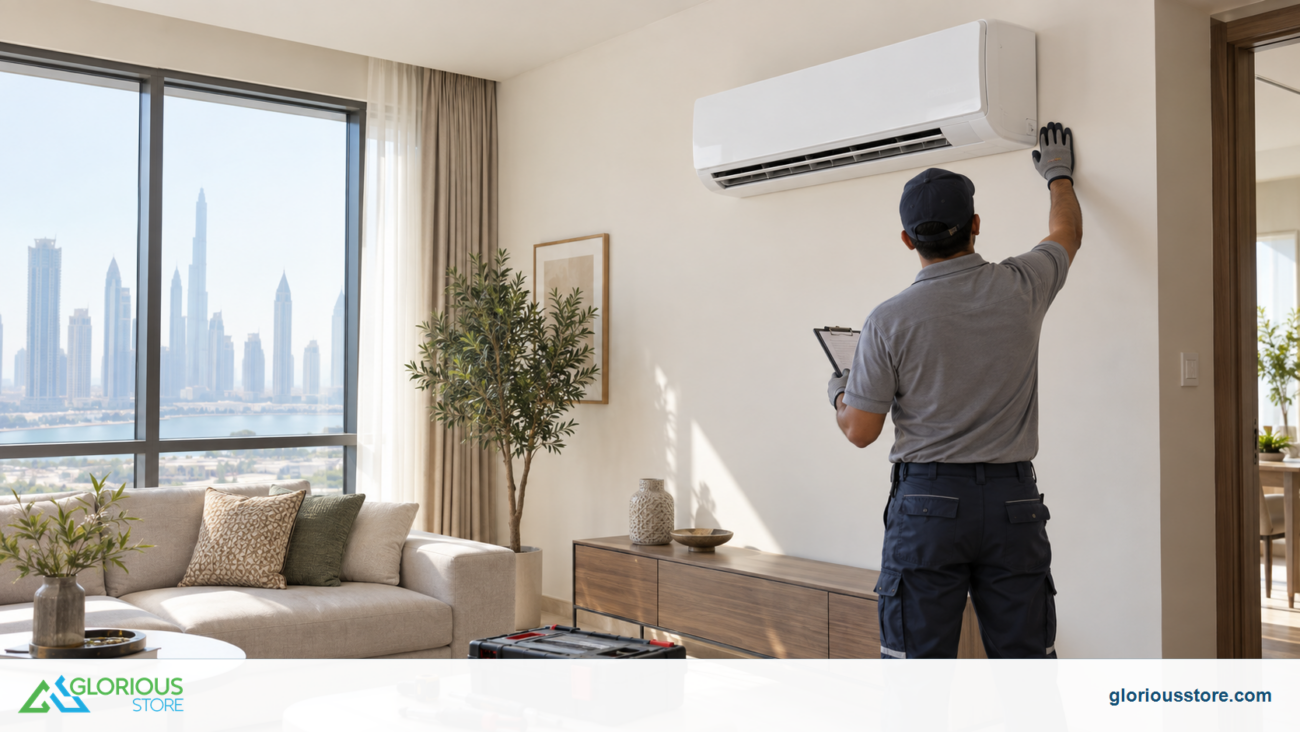
A split air conditioner is not a plug-and-play appliance. The indoor unit, outdoor unit, refrigerant lines, condensate drain, electrical supply, mounting points, access and commissioning all have to work as one system. A good buying decision therefore begins before checkout—with a written installation plan.
That makes this topic timely. World Habitat Day 2026 falls on October 5 in Muscat under the theme “Adequate Housing for All.” UN-Habitat’s 2026 housing work treats habitability and access to services as parts of adequate housing. For UAE residents, responsible cooling decisions are one practical part of creating a safe, usable home, but this guide does not suggest that one appliance solves broader housing challenges.
Use this split AC installation checklist UAE shoppers can take to a landlord, building manager, retailer and qualified installer. It is designed for apartments and villas in Dubai and across the Emirates, with reminders to check the rules that apply to the specific property and emirate.
1. Get written permission before ordering
If you rent or live in a managed building, ask before drilling, altering the façade, adding an outdoor condenser, changing drainage or modifying an electrical circuit. The tenancy contract, owners’ association, developer, facilities manager and local authority may each affect what is allowed.
Request written answers to these questions:
- Is a wall-mounted split AC permitted in this room?
- Where may the outdoor unit be placed?
- Is there an approved route for pipes, cable and condensate drainage?
- Must the work use an approved contractor or work permit?
- Are there limits on drilling hours, façade appearance, noise or access?
- Who must restore penetrations and finishes when the tenancy ends?
Do not assume a neighboring apartment’s installation proves that the same route is approved for yours. Building layouts, fire separations, waterproofing and service zones can differ.
2. Size the system from the room load, not a shortcut
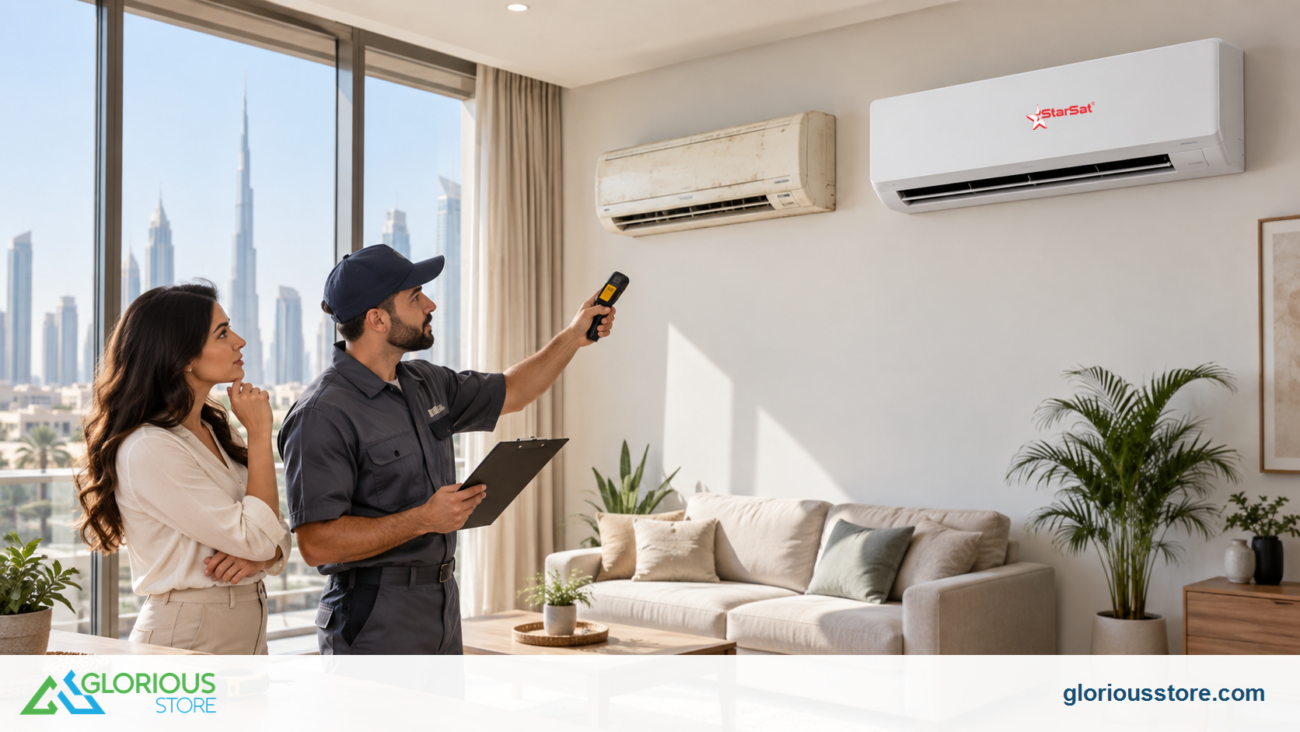
Floor area is only one input. A qualified heat-load assessment should also consider ceiling height, glazing, afternoon sun, insulation, occupancy, appliances, ventilation, air leakage and whether the room opens into another space. An oversized unit may satisfy the thermostat quickly without delivering the comfort expected in humid conditions; an undersized unit may run continuously and still struggle.
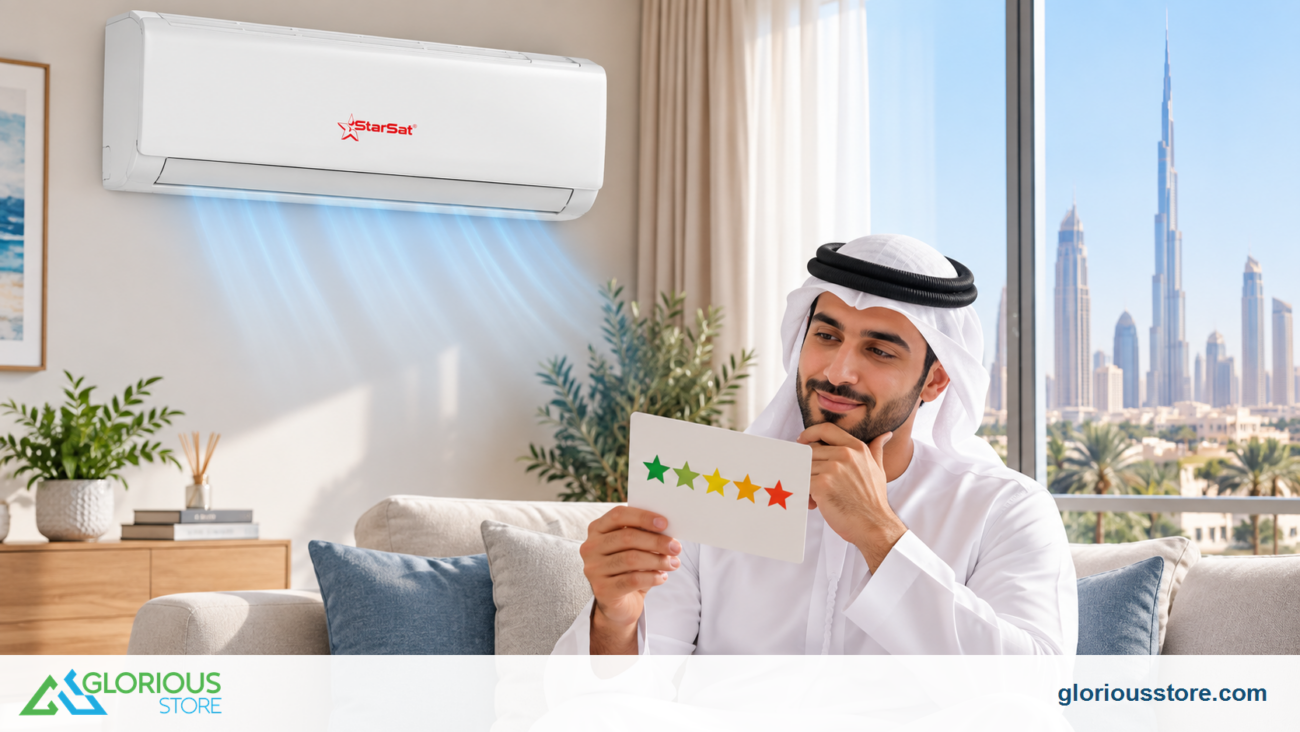
For a public buying overview, the inverter AC and UAE energy-rating guide explains why capacity, inverter terminology and label evidence are separate checks.
Ask the installer to record the selected capacity and the assumptions behind it. “This size is popular” is not a calculation.
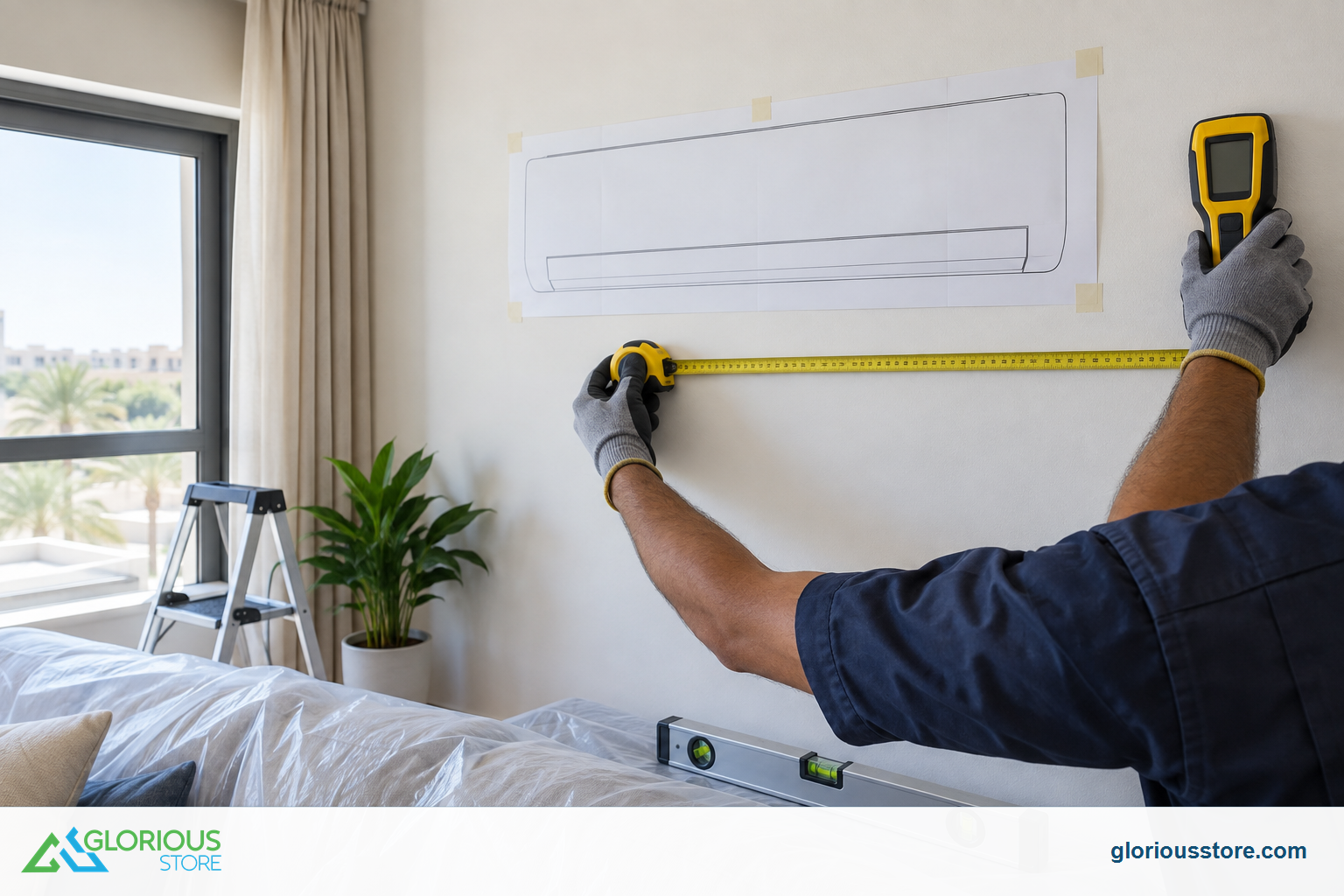
3. Confirm the indoor-unit position
The indoor unit needs clear airflow and practical service access. It should not blow directly onto a bed or desk if that would make occupants uncomfortable. Curtains, tall cabinets and decorative panels must not block the inlet or outlet.
Before drilling, the installer should inspect the proposed wall and check for concealed electrical, plumbing or other services using suitable methods. The position must support the mounting plate and unit safely. Manufacturer clearances—not a generic online diagram—should decide the distance from the ceiling and adjacent surfaces.
Also confirm where filters can be removed and where a technician can later open the cover. A unit squeezed into a decorative recess may look neat but become difficult to clean or repair.
4. Approve the outdoor-unit and drainage route
The outdoor condenser needs a stable approved support, unobstructed ventilation and access for cleaning and service. Hot discharge air should not be trapped or directed into an enclosed balcony. The final position should respect the manufacturer’s clearances and the building’s rules.
Condensate must drain reliably to an approved point. Ask how the route will maintain fall, how it will be supported, and how indoor leaks will be prevented. Water should not drip onto a walkway, façade, another property or electrical equipment. If a pump is proposed because gravity drainage is impossible, ask who maintains it and what happens if it fails.
Agree how wall penetrations will be sealed against air, water and pests. In a rental, include restoration responsibility in writing.
5. Treat the electrical supply as professional work
Do not connect a split AC through an extension lead or improvise the circuit. A qualified professional should confirm supply voltage, connected load, cable size, protective devices, isolation and earthing for the exact model and installation.
For Dubai, the published DEWA Regulations for Electrical Installations state that each room air-conditioning unit is to be connected to a separate final sub-circuit and describe control requirements for room AC equipment. These are technical regulations for competent designers and installers, not DIY instructions. Ask the contractor to confirm the latest applicable DEWA, Dubai Building Code, building-management and manufacturer requirements. Other emirates can have different procedures.
6. Put the commercial scope in writing
An attractive appliance price does not automatically include a complete installation. Before paying, obtain a line-item scope covering:
| Item | Confirm in writing |
|---|---|
| Equipment | Exact indoor/outdoor model pair, capacity, serial numbers and country specification |
| Standard materials | Included pipe length, cable, drain, insulation, trunking, bracket or base |
| Extra work | Core drilling, long pipe runs, condensate pump, scaffolding or lifting, access permits |
| Electrical | Circuit, isolator, breaker/protection work and who is licensed to complete it |
| Building work | Permissions, penetration sealing, waterproofing and finishing |
| Commissioning | Leak/pressure procedure, drainage test, operating test and readings provided |
| Warranty | Appliance and workmanship coverage, exclusions, response route and documents |
| Removal | Old-unit recovery, waste disposal and whether refrigerant handling is included |
For refrigerant-specific questions, use the separate AC refrigerant guide for UAE installers. Do not open refrigerant lines or release refrigerant yourself.
7. Compare current StarSat inverter AC options responsibly
Glorious Store’s live listings were checked on September 30, 2026. Both pages showed 10 units in stock and an Add to Cart control at the time of review:
- StarSat 9000 Btu/h Inverter Air Conditioner — product code AC-9000; 9000 Btu/h cooling/heating; wall mounted; indoor unit 785 × 335 × 240 mm; outdoor unit 745 × 335 × 550 mm.
- StarSat 12000 Btu/h Inverter Air Conditioner — product code AC-12000; 12000 Btu/h cooling/heating; wall mounted; indoor unit 865 × 335 × 240 mm; outdoor unit 810 × 335 × 595 mm.
Stock is a dated snapshot and can change. Neither listing should be selected by capacity alone. Confirm the room load, electrical data, efficiency label, supplied accessories, installation scope, warranty and exact model revision before ordering. The published dimensions help with planning, but the manufacturer’s current installation manual should control clearances and line limits.
8. Watch the installation and commissioning sequence
A professional team should protect floors and furniture, reconfirm the approved route, mount both units securely, install and insulate the lines correctly, complete the drain, make the electrical connection safely, seal penetrations and commission the system according to the manufacturer’s procedure.
Do not accept “it blows cold” as the entire handover. Cooling at the grille does not prove that drainage, connections, controls and long-term service access are correct.
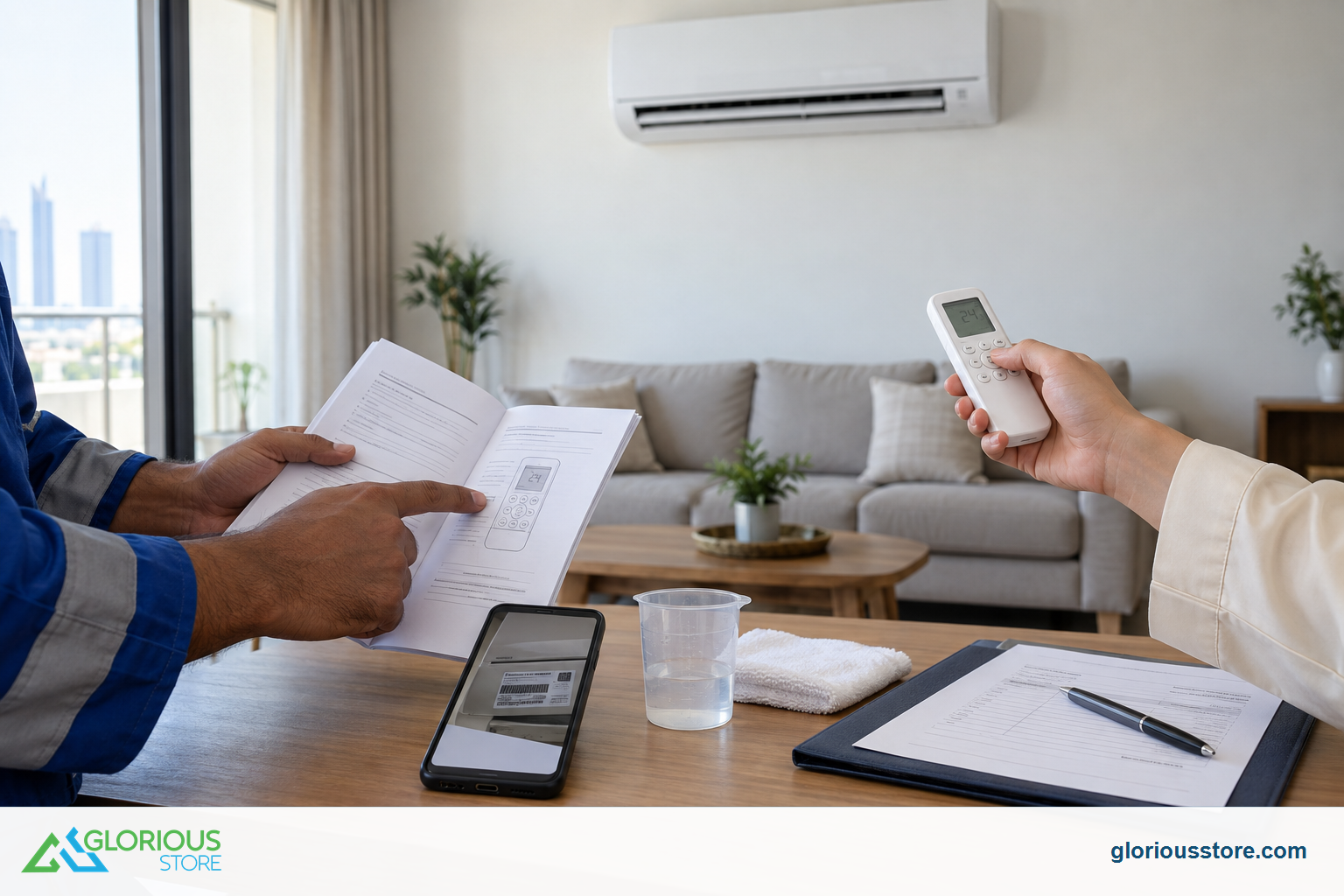
9. Complete a documented handover
Before the installer leaves, collect:
- photos of the indoor and outdoor serial/model labels;
- invoice, warranty terms and installation-workmanship coverage;
- the user and installation manuals for the exact model;
- remote-control explanation, including cooling, heating, fan and auto functions actually supported;
- confirmation that condensate drained correctly during the test;
- the approved pipe/drain route and any concealed-work photos;
- contact details for faults, leaks and warranty service;
- filter-cleaning instructions and the first service recommendation.
Test the remote, set point, fan control and both supported operating modes. Check for abnormal vibration, indoor dripping, damaged finishes or loose trunking. If the unit will be used primarily for cooling, the best AC temperature in UAE guide explains DEWA’s 24°C starting-point guidance and sensible operating habits.
Red flags that should pause the job
Stop and seek clarification if a contractor proposes drilling before permission, guessing the capacity, hiding model labels, draining onto a façade, using an extension lead, leaving exposed conductors, omitting a written warranty, or declaring commissioning complete without a drainage and operating check.
Leaks, burning smells, repeated breaker trips, smoke, ice buildup or unusual noise require professional attention. Do not remove covers or attempt refrigerant or electrical repairs.
Frequently asked questions
Do I need landlord or building approval for a split AC in the UAE?
Often, yes—especially when drilling, altering a façade, adding an outdoor unit, using shared access or changing drainage/electrical work. Check the tenancy contract and obtain the relevant written approvals before ordering.
Is installation included with an AC purchased online?
Do not assume it is. Ask for a written line-item scope covering materials, drilling, electrical work, brackets, access, commissioning, finishing and warranty.
Can I choose 9000 or 12000 BTU from room area alone?
No. Area is only one input. Sun, glazing, insulation, ceiling height, occupancy, equipment and air leakage also affect the load. Use a qualified assessment.
What installation documents should I keep?
Keep the invoice, model and serial photos, manuals, warranty, approvals, contractor details, commissioning record and concealed-route photos.
What should I verify before paying the final balance?
Confirm stable operation, correct drainage, safe electrical completion, intact finishes, remote functions, documentation, warranty contacts and the agreed cleanup.
Plan first, then choose the equipment
The best split AC purchase is one that fits the calculated load, the approved location and the complete installation plan. Review the current StarSat air-conditioner range, then contact Glorious Store with the room details and installer questions that matter to your property. Recheck stock and specifications on the product page before ordering.




Leave a comment