
During the UAE’s hottest months, it is tempting to set an air conditioner to its lowest temperature and leave it running at maximum speed. That approach does not necessarily cool a room faster, and it can make the system run continuously while comfort and electricity consumption become harder to manage. A better starting point is to use a sensible thermostat setting, reduce heat entering the room, maintain airflow, and choose an air conditioner that suits the space.
Dubai Electricity and Water Authority (DEWA) recommends setting the thermostat to 24°C during summer and using auto mode so the system cycles on and off efficiently. This guide explains how UAE residents can apply that advice in real homes, what to check when cooling feels weak, and how to compare an inverter air conditioner without relying on exaggerated promises.
Is 24°C the Best AC Temperature in the UAE?
For many occupied homes, 24°C is a practical starting point, not an inflexible rule for every person or building. DEWA’s current electrical-appliance guidance recommends 24°C in summer, regular filter cleaning, closed doors and windows, and auto mode. Its conservation guidance also notes that raising the set point can reduce cooling consumption, although actual results depend on the building, equipment, weather, occupancy, and usage pattern.
Start at 24°C and give the system time to stabilize. If the room remains uncomfortable, first check humidity, airflow, direct sunlight, open doors, clogged filters, and whether the AC is correctly sized. Turning the thermostat down to 16°C cannot make an undersized, dirty, damaged, or poorly installed system deliver capacity it does not have.

Why Auto Mode Usually Makes Sense
In auto mode, the system responds to the thermostat rather than forcing the indoor fan or compressor to operate at one manual setting indefinitely. On compatible inverter models, output can adjust as the room approaches the target. That can provide steadier comfort than repeated manual changes.
Auto mode is different from an automatic temperature chosen by the appliance. Read the remote-control symbols and product manual because labels vary. Avoid confusing cooling mode with fan-only or dry mode. Fan-only mode circulates air but does not provide active refrigeration, while dry mode is designed primarily for moisture removal and may not suit every very-hot period.
Reduce Heat Before Asking the AC to Work Harder
Cooling performance depends on the whole room. During afternoon sun, close curtains or blinds on exposed windows. Keep exterior doors and windows shut, seal obvious air gaps, and avoid placing heat-producing appliances close to the thermostat. If cool air escapes continuously, even a capable unit must run longer.
Use ceiling or portable fans only when the room is occupied. Air movement can improve perceived comfort, but a fan does not reduce room temperature and should be switched off when nobody is present. Keep furniture and curtains away from the indoor-unit outlet so conditioned air can circulate.
Clean Filters and Protect Airflow
Dust can accumulate quickly in UAE conditions. A dirty filter restricts airflow and may make a room feel as though the air conditioner is losing power. DEWA recommends cleaning filters regularly, and its detailed summer guidance suggests checking them periodically or at least monthly during heavy summer use.
Follow the manufacturer’s instructions before removing a washable filter. Switch off the unit safely, let a washed filter dry completely, and never operate equipment with damaged covers or exposed electrical components. Cleaning a user-serviceable filter is not a substitute for professional servicing of refrigerant, drainage, wiring, coils, or compressor problems.
Call a qualified technician if you notice leaking water, ice buildup, burning smells, smoke, repeated breaker trips, unusual noise, or persistently warm air. Do not open sealed refrigeration components or attempt electrical repairs yourself.
Choose AC Capacity for the Actual Room
Air-conditioner capacity is commonly expressed in BTU/h, but floor area alone is not enough for an accurate recommendation. Ceiling height, insulation, window size, sun exposure, room orientation, occupancy, appliances, door openings, and the floor of the building can all affect the cooling load.

An undersized unit may run for long periods without reaching the target. An oversized fixed-speed unit may cycle too quickly and provide uneven temperature or humidity control. Ask a competent installer to calculate the cooling load and confirm electrical and installation requirements before purchase.
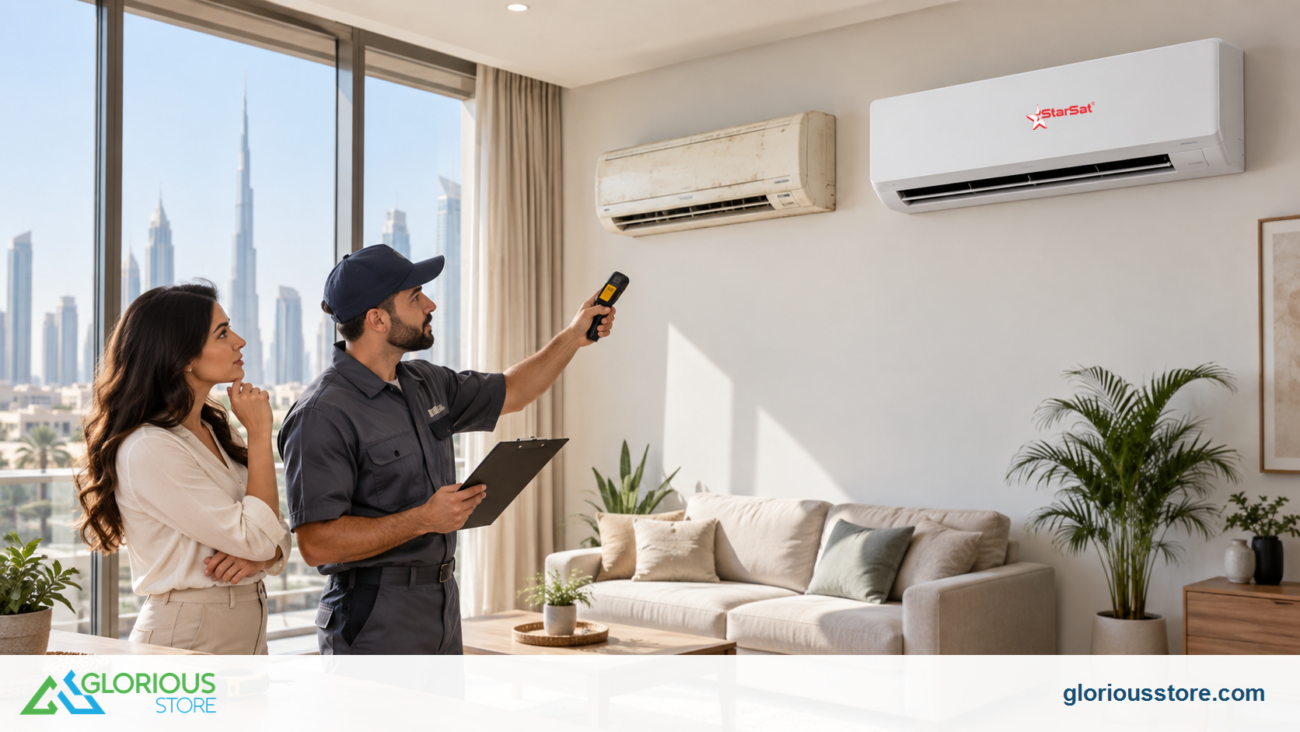
The Glorious Store air-conditioner category can be used to review currently listed options, but availability must be checked on the product page before ordering. At the time of research, the StarSat 24,000 BTU/h inverter model page was visible but marked out of stock, so this article does not present it as currently purchasable. That availability check is important: capacity and features are useful comparison points, but shoppers should not be directed toward unavailable stock.
What Does an Inverter Air Conditioner Do?
An inverter air conditioner can vary compressor output instead of relying only on simple full-output on/off operation. In a properly sized and installed system, that may help maintain a steadier temperature and reduce abrupt cycling. It does not guarantee a specific electricity bill or percentage saving.
Real consumption depends on the efficiency rating, capacity, insulation, thermostat setting, maintenance, installation quality, outdoor conditions, and hours of use. Compare the UAE energy label and official specifications rather than assuming every product described as “inverter” will perform identically.
A Sensible Daily Cooling Routine
Use this routine as a practical starting point:
DEWA identifies noon to 6:00 PM as Dubai’s summer peak-load period and encourages residents to limit unnecessary high-consumption appliance use during those hours. Comfort and safety still come first; the useful takeaway is to avoid waste, maintain sensible settings, and move optional heavy appliance use outside peak hours where practical.
Common Mistakes That Increase Cooling Work
Setting the thermostat extremely low
A very low target can keep the system running without solving blocked airflow, solar heat gain, poor sizing, or a fault. Diagnose the reason the room is not cooling.
Leaving windows or balcony doors open
Hot, humid outdoor air continuously adds cooling load. Check seals and household habits before assuming the equipment is defective.
Ignoring filter maintenance
Restricted airflow affects comfort and can contribute to operational problems. Use the cleaning schedule specified for the unit and local conditions.
Buying on BTU alone
Capacity matters, but so do efficiency, dimensions, power requirements, noise, warranty, installation, after-sales support, and actual room load.
Treating marketing claims as guaranteed savings
No seller can responsibly promise a precise bill reduction without knowing the property and usage. Use official labels, specifications, and qualified sizing advice.
Frequently Asked Questions
Should I leave my AC at 24°C all day?
Use 24°C as a starting point while the room is occupied. Whether to leave a unit running when away depends on humidity, building type, pets, belongings, duration, system controls, and property guidance. Avoid cooling unused rooms unnecessarily.
Does setting the AC to 16°C cool the room faster?
Usually, the thermostat sets the target rather than creating extra capacity. If the unit is already operating at high output, selecting a much lower number may simply make it run longer.
How often should I clean the AC filter in the UAE?
Follow the manufacturer’s schedule and inspect more often during dusty, heavy-use periods. DEWA’s summer guidance recommends regular cleaning and notes at least monthly cleaning during summer as a practical benchmark.
Is an inverter AC always cheaper to run?
Not automatically. A correctly sized efficient inverter unit can operate smoothly at partial load, but installation, maintenance, room conditions, set point, energy rating, and usage determine actual consumption.
What size air conditioner do I need?
Request a cooling-load assessment. Room area is only one input; windows, insulation, ceiling height, sun, occupancy, appliances, orientation, and air leakage also matter.
Build a Better UAE Cooling Setup
Efficient summer cooling is not one magic setting. Begin at 24°C, use the correct operating mode, block direct sun, keep cooled air inside, maintain the filter, and have capacity checked for the actual room. When comparing products, review current stock and official specifications in the Glorious Store air-conditioner collection, then confirm installation requirements with a qualified professional.
That combination is more useful than pushing the thermostat lower and hoping the equipment will compensate for every other problem.

Leave a comment