
A small kitchen coffee station succeeds when the whole routine fits, not just the machine. You need somewhere to prepare coffee, lift a cup, refill water, and remove the drip tray without moving everything else. In a compact UAE apartment, that practical test is more useful than buying a machine because it looks narrow in a photograph.
Start with your available counter and the drinks you actually make. Then check the exact appliance dimensions and operating instructions. This guide gives you a measurement worksheet, three layout approaches, and questions to ask before ordering. It is about making a workable coffee corner, not renovating the kitchen or choosing the most expensive equipment.
Why compact coffee setups matter at IFA 2026
IFA Berlin runs September 4–8, 2026, and its Home Appliances area includes coffee machines alongside smart-kitchen and connected-appliance themes. The official JURA exhibitor listing also highlights the A8 range with a slim-design message. These are useful signs that everyday usability and appliance format remain part of the coffee conversation.
The takeaway for a UAE kitchen is a planning principle, not a promise about any announced product: evaluate the space a machine needs while being used. A slim body can still need room above, behind, or beside it. The IFA example is industry context only; this article does not claim the featured JURA range is available from Glorious Store or that current StarSat models share its features.
Measure your small kitchen coffee station in two passes
Pass one: record the empty space
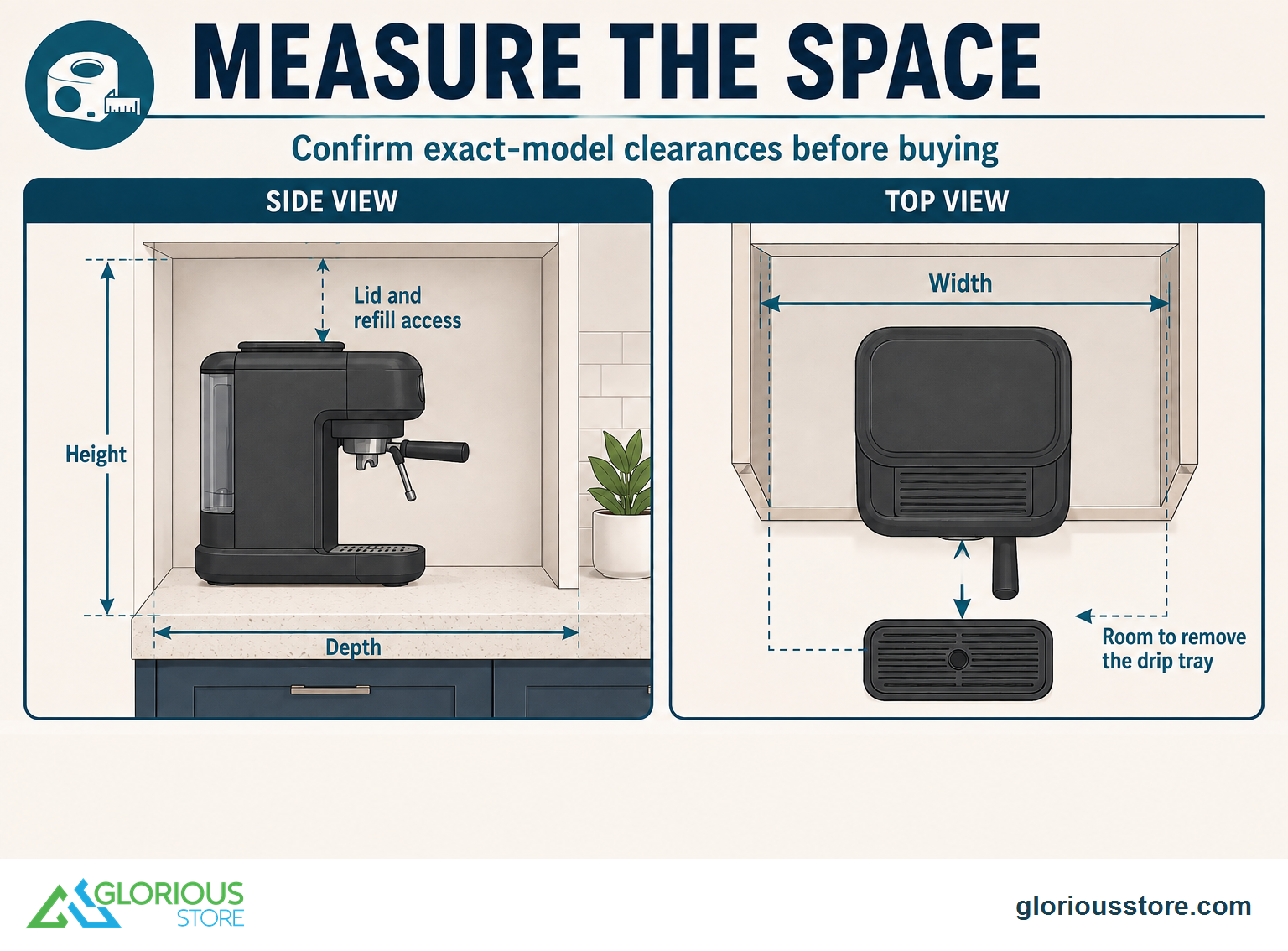
Clear the proposed spot and measure the usable width, the depth from the rear boundary to the counter edge, and the height to the lowest obstruction above it. Include shelves, cabinet trim, handles, and anything that hangs below a cupboard. Measure the actual space instead of relying on a kitchen plan that may omit these details.
Next, open neighboring doors and drawers. Check whether a cupboard door would hit the machine or whether someone preparing breakfast would need the same standing space. Photograph the area with the measurements written down. That gives the store a much better basis for answering fit questions than a close-up of the machine you want.
Pass two: allow for movement
Ask how the water tank comes out, where its lid opens, and how coffee is loaded. Check the route for removing the drip tray and any used-coffee container. If a model has a bean hopper, confirm that you can reach and refill it. The required space depends on the exact design; this guide does not prescribe a universal clearance in centimeters.
Also test your usual cup and, if relevant, milk pitcher. Can you put them in position and lift them away comfortably? A machine that fits under a shelf when switched off may still be awkward to use there. Follow the manufacturer’s placement, ventilation, and heat-clearance instructions before deciding the final location.
A worksheet to complete before shopping
Write down the answers below. Leave an item marked “confirm” when a listing does not resolve it; guessing defeats the purpose of measuring. You can send this short checklist with the model name when asking Glorious Store for advice.
- Available space: usable width, depth, and height, including the lowest shelf or cabinet trim.
- Appliance measurements: confirmed width, depth, and height of the machine itself, not assumed carton dimensions.
- Access paths: direction and space needed for the tank, hopper lid, tray, and coffee loading.
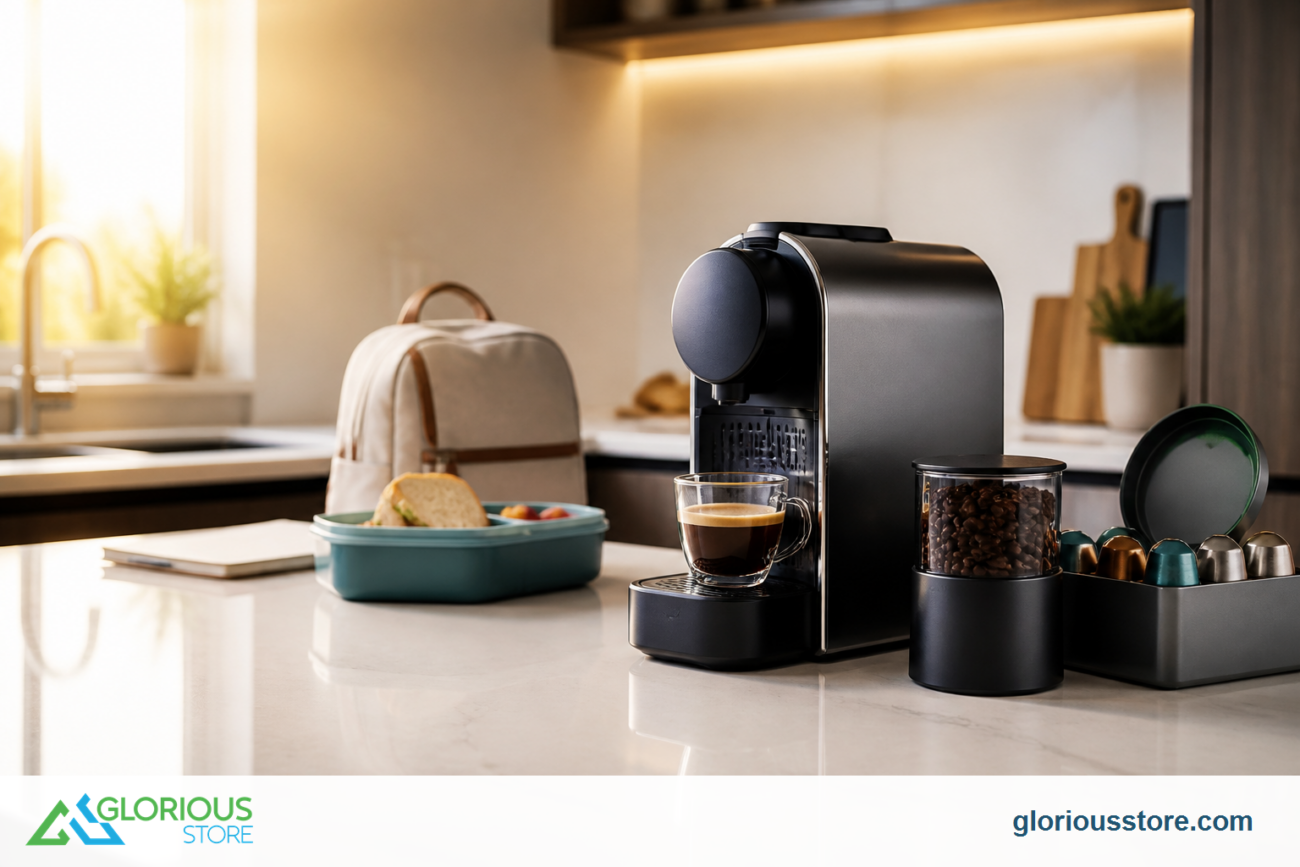
- Daily accessories: your cup, pitcher, coffee container, and preparation tools.
- Placement requirements: manual-specified clearances, a suitable electrical connection, and a stable supporting surface.
- Cleanup route: somewhere to put removable parts and reach the sink without crossing the brewing area.
A simple paper footprint can help you visualize placement once the machine’s base measurements are confirmed. Add separate paper shapes for your cup and preparation tools. This is a layout exercise, not a substitute for manufacturer clearances. Remove the paper before installing or operating any appliance.
Current StarSat listings: what they tell you about space
The Glorious Store coffee-machine collection listed two models during our September 4, 2026 check. Both had working Add to Cart controls. Availability is a dated snapshot and can change; neither is described here as a newly launched 2026 model.
StarSat Espresso Master ST-697B
The ST-697B product page showed 1 in stock. It lists a 1-liter removable water tank, a detachable frothing nozzle, and support for ground coffee and pods. Its additional-information section gives dimensions of 35 × 18.5 × 34 cm and weight of 3.83 kg.
Those numbers are a starting point, not a confirmed counter template: the table does not label the dimension order or explicitly distinguish appliance measurements from packaging. Ask the store to confirm those points, the tank-removal direction, and compatibility with your intended pod format. Consider this model if its verified physical layout suits your space and you do not need a built-in grinder.
StarSat PrecisionGrind Espresso Master AC-517EA
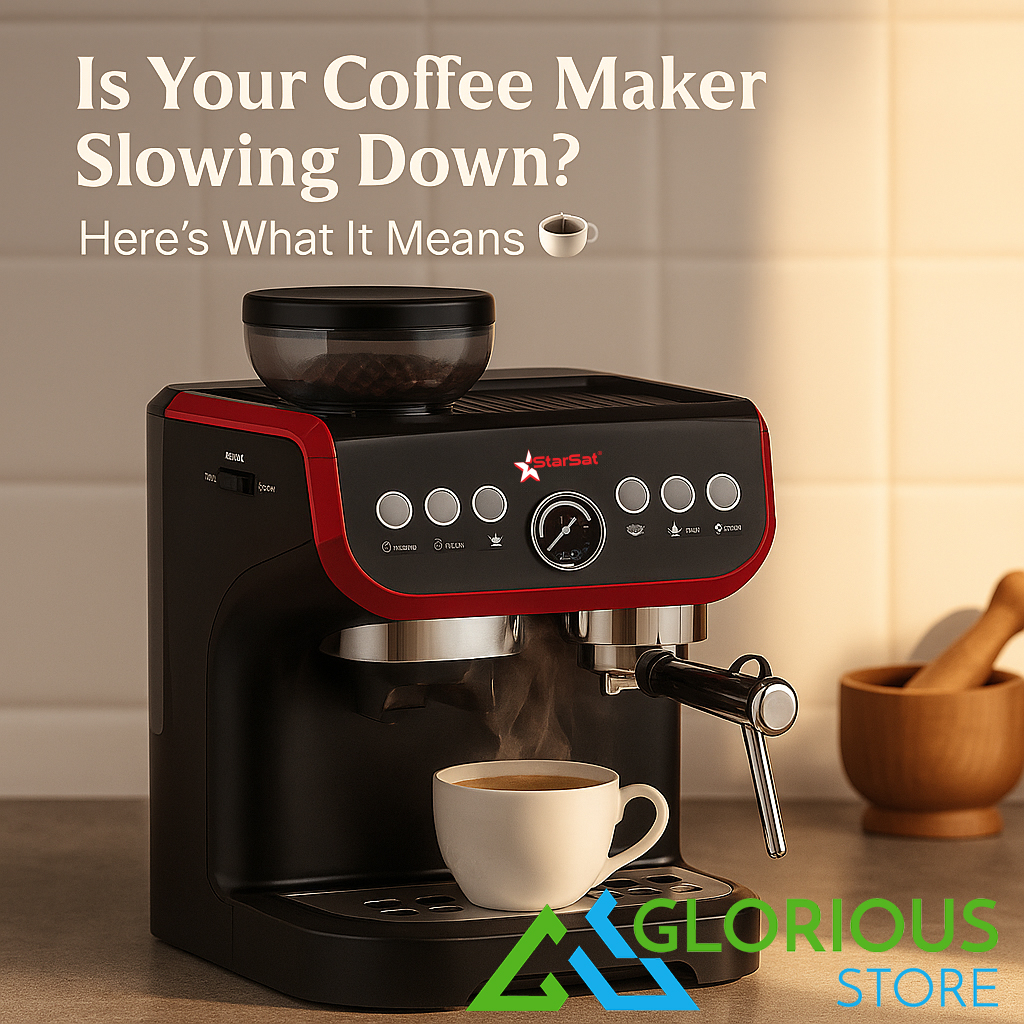
The AC-517EA product page showed 20 in stock. It lists a built-in adjustable coffee mill, a 2-liter transparent water tank, milk frothing, and a stainless-steel drip tray. The additional-information table gives 36 × 36 × 48 cm and 7.8 kg, with the same dimension-orientation and packaging questions to confirm.
Consider this option when keeping grinding and brewing in one appliance suits your routine and the confirmed operating space fits. An integrated grinder can remove the need to place a separate grinder on the counter, but it does not automatically make the complete setup smaller. Include access to the hopper and tank in the comparison.
For the coffee-input decision itself, read our espresso machine with grinder versus pods guide. Here, the key decision is placement: shortlist only equipment you can refill, operate, and clean comfortably.
Three layouts worth testing
One straight section of counter
Arrange your supplies, brewing area, and temporary cleanup space along one section. Reverse the order to suit how you work. Keep the machine in its approved position and avoid using the counter edge as storage for cups or tools. This layout works best when it does not take over your main food-preparation surface.
A corner with an open working side
A corner can look tidy, but it may make a rear tank or side control difficult to reach. Test the full routine before committing. If you must turn or pull the machine forward for every refill, look for another position rather than treating repeated movement as a permanent solution.
A separate stable surface
A dedicated surface can free kitchen counter space, provided it meets the appliance’s supporting-surface and electrical requirements. Do not assume a decorative shelf or lightweight trolley is suitable. Confirm load capacity, stability, access, and placement instructions, and keep the route to water and cleanup practical.
Keep the station useful after the first week
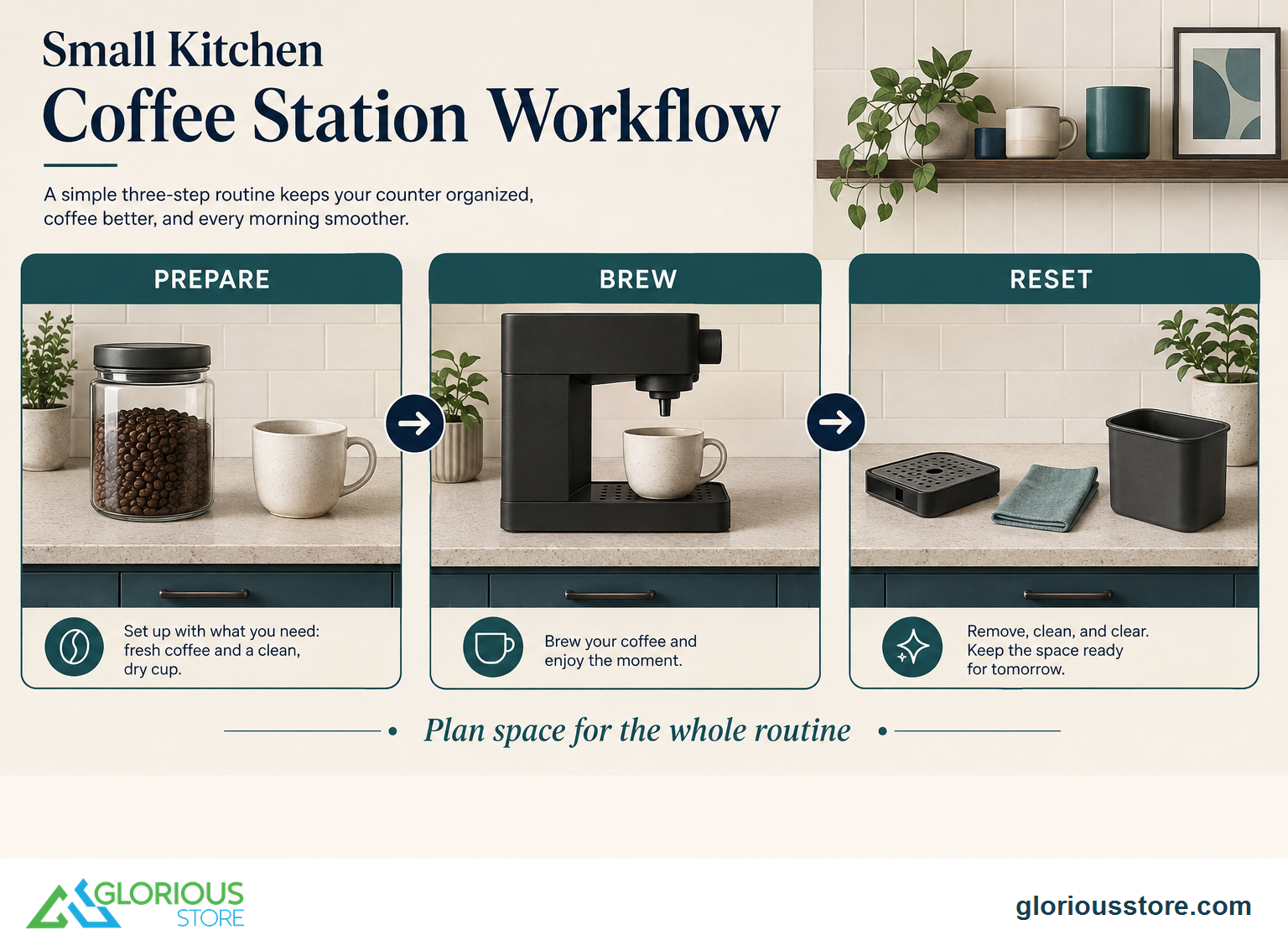
Begin with the tools you actually use rather than filling the counter with accessories. Store spare cups and extra supplies elsewhere. Keep cleaning materials separate from coffee supplies, and follow the exact machine instructions for cleaning removable parts, milk components, and descaling. Do not assume every part is dishwasher-safe.
Before buying organizers, rehearse making and clearing one drink with the objects you already own. Notice where you put down a lid, spoon, or pitcher. Those temporary landing spaces often explain why an attractive coffee corner feels cramped. Good organization should reduce obstacles, not add more containers to work around.
Frequently asked questions
How much counter space does a coffee station need?
There is no reliable universal size. Add the confirmed machine footprint, manufacturer-required clearances, refill and tray-removal access, and the tools your routine uses. Measure your kitchen and check the exact model before ordering.
Can I put an espresso machine under a cabinet?
Only if the location meets the manufacturer’s placement and clearance requirements and leaves workable access. Check heat and steam guidance, lid opening, and tank removal. A closed machine fitting under a cabinet does not prove the location is suitable during use.
Does a built-in grinder always save space?
No. It combines functions in one appliance, but the full machine may occupy more room. Compare complete setups, including a separate grinder if you need one, and verify operating access rather than comparing photographs alone.
Are both StarSat coffee machines currently available?
At our September 4, 2026 check, ST-697B showed 1 in stock and AC-517EA showed 20. Recheck the linked listings before ordering, especially the low-stock ST-697B. Confirm essential specifications and included accessories with the store.
Build around your available space
The best small kitchen coffee station is one you can use without rearranging the kitchen for each cup. Complete the worksheet, shortlist a current model, and resolve any unclear measurements before buying. Contact Glorious Store with the model name, your available dimensions, and a photo of the proposed space to check fit and current availability.


Leave a comment