
Choosing a 9000 vs 12000 BTU air conditioner is not simply a contest where the larger number wins. The right capacity depends on the room, its exposure to UAE sun, ceiling height, glazing, insulation, occupancy, and how the space is used. A smaller bedroom with controlled afternoon sun may need less cooling than a larger room with broad west-facing windows—even when both are called “bedrooms” on a floor plan.
The decision is timely for UAE families. The Ministry of Education lists August 31, 2026 as the start of the 2026–2027 school year for public schools and private schools following the Ministry curriculum. At the same time, an August 2 report based on National Center of Meteorology guidance describes continued intense heat and rising humidity during the month. Preparing a comfortable bedroom or study area before early-morning routines return is sensible, but guessing the capacity can lead to poor comfort or needless expense.
This guide explains what the two BTU ratings mean, which room factors matter most, and how two current StarSat inverter models compare. Product pages and stock were checked on August 27, 2026.
What does 9,000 or 12,000 BTU/h mean?
BTU/h is a cooling-capacity rating: it describes how much heat an air conditioner is designed to move in an hour under its rated conditions. A 12,000 BTU/h unit has more nominal cooling capacity than a 9,000 BTU/h unit. That does not prove it is the better choice for every room, nor does it tell you actual electricity use by itself.
Capacity and efficiency are different questions. Capacity is about the heat load the system can handle. Efficiency concerns how much energy the equipment uses to provide cooling under specified test conditions. Installation quality, refrigerant charge, airflow, filter condition, thermostat setting, building envelope, and outdoor conditions also affect real performance.
Both StarSat options in this guide are described on their current listings as inverter models with cooling and heating. Inverter technology can vary compressor output instead of relying only on simple full-on/full-off operation, but the system still needs to be appropriately selected and installed.
When a 9,000 BTU air conditioner may fit
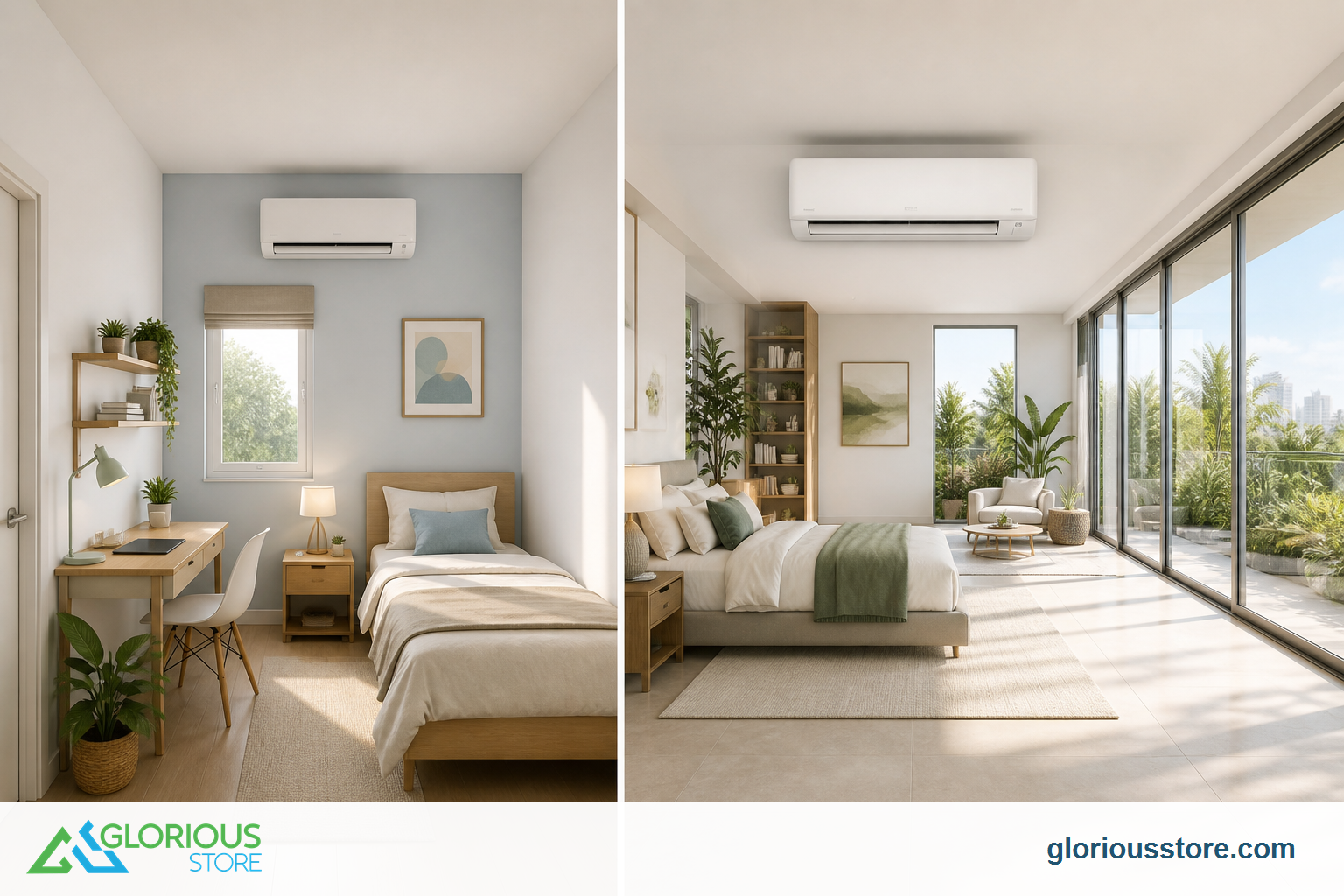
A 9,000 BTU/h model is the lower-capacity option in this comparison. It is more likely to enter the conversation for a compact enclosed bedroom, small study, or similarly controlled space. The current StarSat 9000 Btu/h Inverter Air Conditioner listing describes it as a wall-mounted cooling/heating model for medium-sized spaces, with a slim indoor unit.
Consider the 9,000 BTU/h option when the room is relatively compact, doors stay closed during cooling, windows are shaded or modest in area, the ceiling is conventional height, and only one or two people normally use the space. Those are screening clues, not a capacity calculation.
Do not choose it only because the purchase price is lower. A unit that cannot keep up with the actual heat load may run for long periods while the room remains uncomfortable. Confirm the intended room, electrical requirements, outdoor-unit position, drainage route, and installation plan before ordering.
When a 12,000 BTU air conditioner may fit
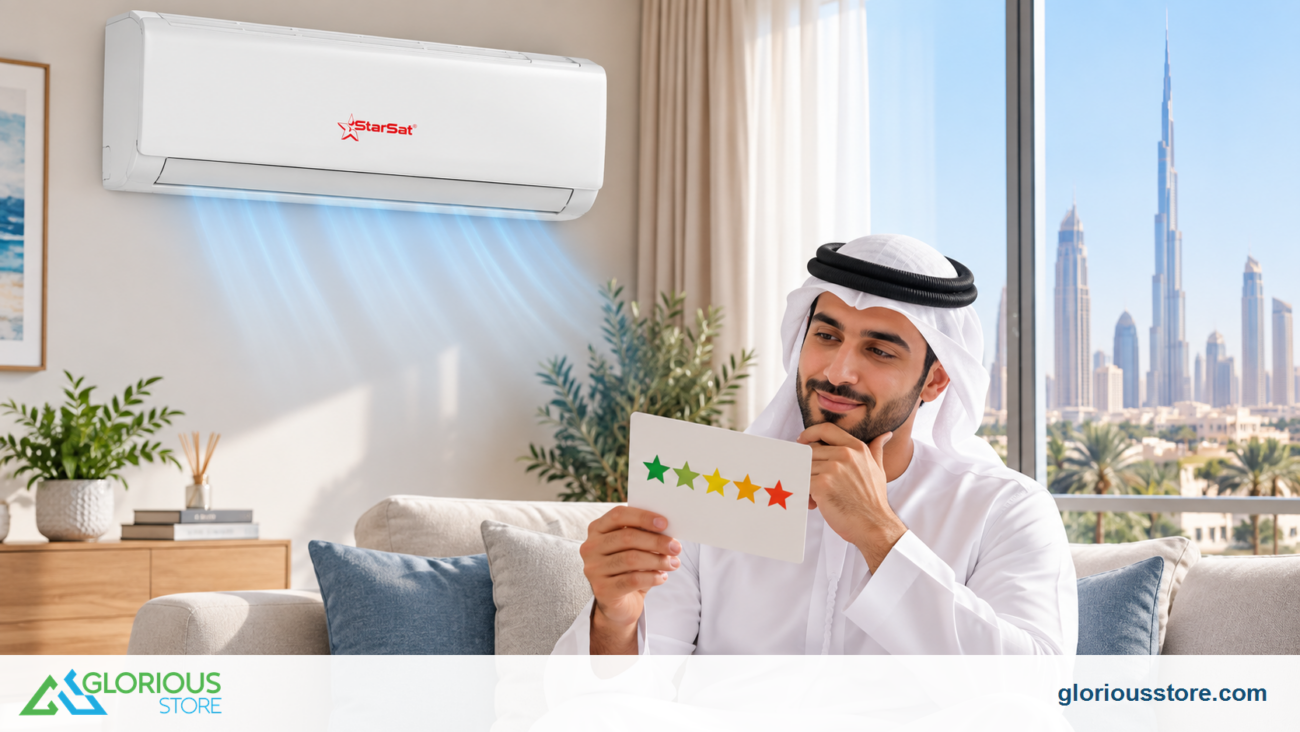
A 12,000 BTU/h model may be the more appropriate candidate for a larger bedroom, a bedroom combined with a study area, or a space with more challenging heat gain. The current StarSat 12000 Btu/h Inverter Air Conditioner listing positions it for larger spaces and states cooling/heating operation, auto climate control, and quiet operation.
More capacity may be useful when the room has significant afternoon sun, larger glazing, a higher ceiling, frequent door opening, more occupants, or equipment that adds heat. Yet buying a larger unit “just in case” is not a reliable rule. The U.S. Department of Energy warns that oversized room air conditioners can cost more, consume more energy, and remove humidity poorly because of excessive cycling. Split inverter systems operate differently from basic window units, but the underlying lesson remains useful: match equipment to the calculated load rather than the biggest label.
Measure the room—and the heat entering it
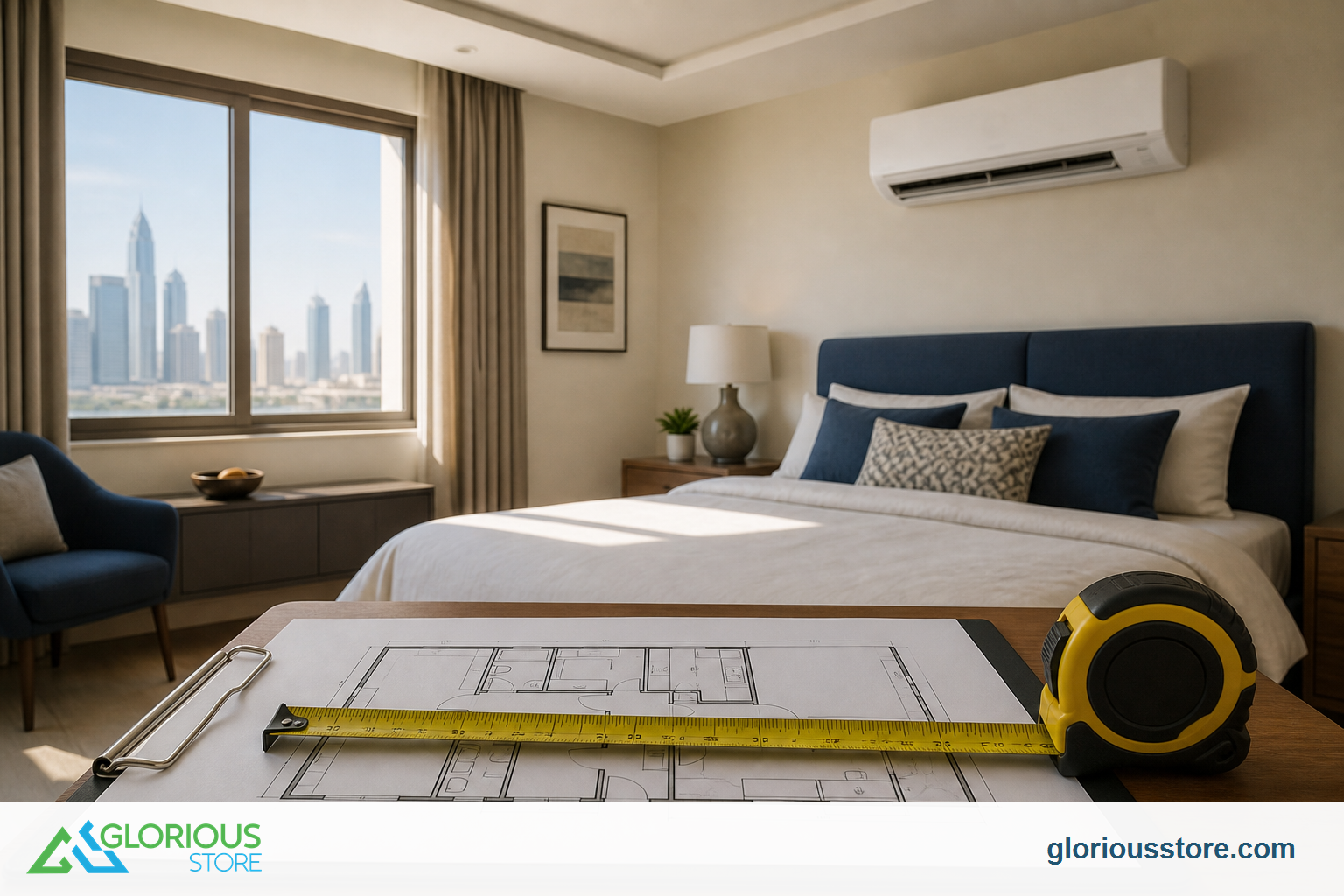
Floor area is an essential starting point. Measure the room’s length and width, note the ceiling height, and record any open connection to a hall, dressing area, or bathroom. Then look beyond the floor plan.
Sun and window exposure
A broad west-facing window can make a room harder to cool in the late afternoon than a similar shaded room. Record window size, direction, shading, curtain or blind use, and whether the glass feels like a major heat source. ENERGY STAR’s room-AC guidance adjusts a baseline capacity upward for very sunny rooms and downward for heavily shaded rooms. Use that principle as a prompt to assess exposure, not as a substitute for a UAE-specific split-system calculation.
Ceiling height and insulation
Higher ceilings add air volume. Weak roof or wall insulation can add continuous heat gain. A top-floor room, villa extension, or room beneath an exposed roof may not behave like an internal apartment bedroom of the same floor area.
People and equipment
Regular occupants add heat. So do gaming PCs, multiple monitors, televisions, bright lighting, and other equipment. A child’s simple homework desk and a multi-monitor workstation are different loads. Note the normal use, not only the room’s name.
Air leakage and door habits
Gaps around doors or windows, frequent door opening, and an open connection to another area increase the effective load. Before upsizing equipment, simple improvements such as closing blinds during strong sun and sealing obvious air leaks may help the selected system work more predictably.
Current 9,000 and 12,000 BTU StarSat options
These stock figures are dated snapshots. Recheck the live page before ordering.
| Model | Current listing highlights | Stock checked Aug. 27 | Best next step |
|---|---|---|---|
| StarSat 9000 Btu/h Inverter Air Conditioner | 9,000 BTU/h cooling/heating; inverter compressor; wall-mounted design; indoor unit listed at 785×335×240 mm | 10 | Shortlist for a compact or controlled room, then confirm the load and installation |
| StarSat 12000 Btu/h Inverter Air Conditioner | 12,000 BTU/h cooling/heating; inverter technology; auto climate control; listing states quiet operation; indoor unit listed at 865×335×240 mm | 10 | Shortlist for a larger or more exposed room, then confirm the load and installation |
The product pages also list outdoor-unit dimensions and weights, which matter for placement and service access. Neither listing provides a universal room-area promise. That is responsible: a single square-meter number cannot account for every UAE building and exposure.
A back-to-school bedroom setup checklist
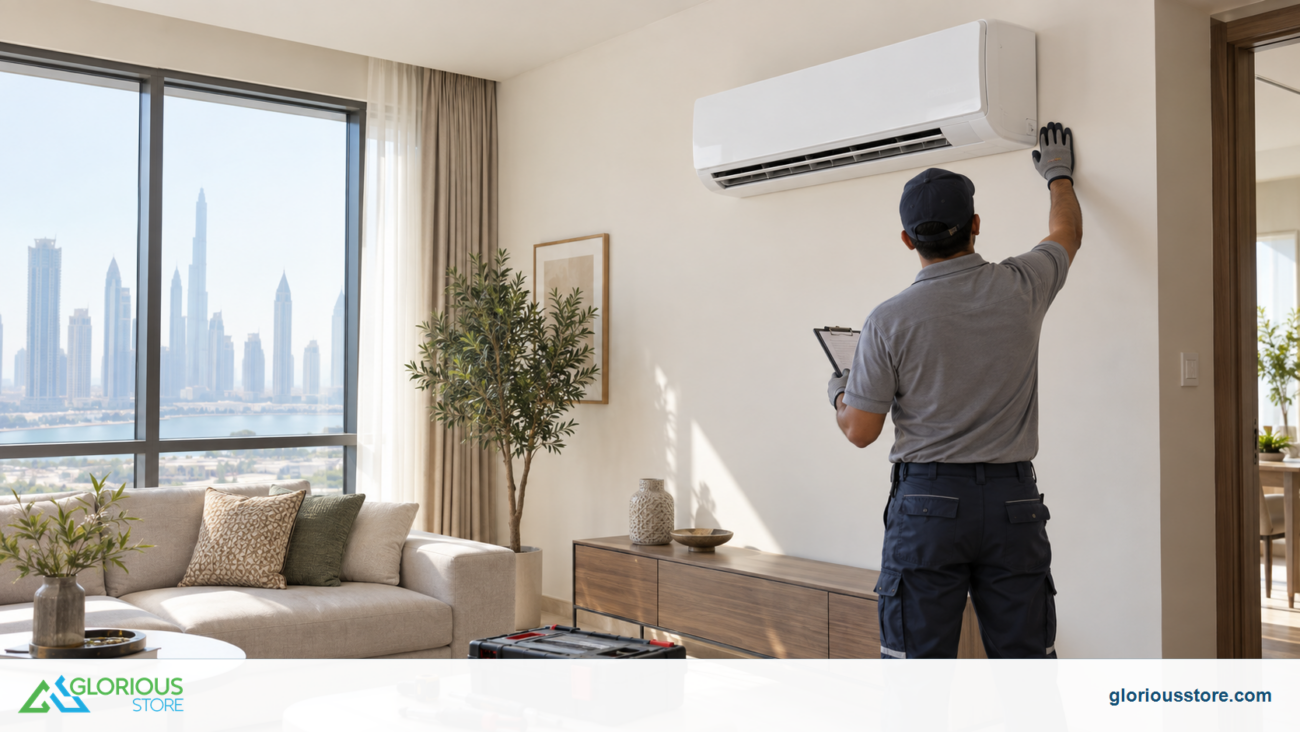
The UAE school calendar makes late August a practical time to restore routines, but an AC purchase should remain evidence-led.
- Measure first. Record length, width, ceiling height, connected spaces, windows, and sun direction.
- Describe real use. Include occupants, computers, televisions, and how often doors open.
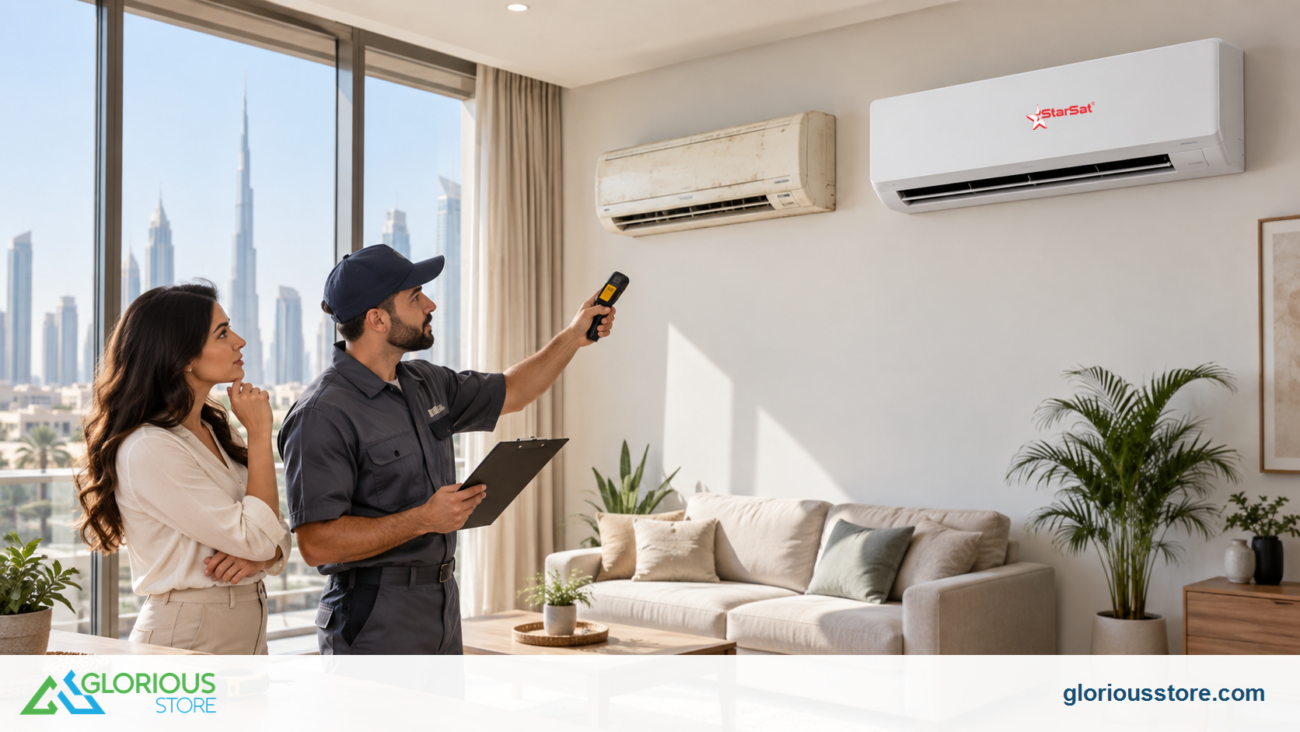
- Ask for a heat-load recommendation. Give the installer accurate measurements and exposure details; ask why 9,000 or 12,000 BTU/h is being proposed.
- Confirm installation scope. Check electrical supply, copper piping, drain routing, outdoor-unit support, wall condition, and any building approval.
- Plan airflow. Avoid directing cold air continuously at the bed or study chair. Make sure curtains and tall furniture will not block supply or return airflow.
- Use a sensible setpoint. Our separate 24°C UAE summer AC guide explains the DEWA starting point and practical comfort adjustments.
- Maintain the system. Clean filters and unobstructed airflow matter. See the AC maintenance articles for routine checks, while leaving refrigerant and electrical work to qualified service personnel.
Frequently asked questions
Is 12,000 BTU always better than 9,000 BTU?
No. It has more nominal capacity, but the better choice is the one matched to the room’s calculated heat load and installed correctly. Oversizing and undersizing can both cause problems.
Can I choose AC capacity from room area alone?
Room area is a starting point, not the full answer. Ceiling height, window size and direction, insulation, roof exposure, occupancy, equipment, air leakage, and connected spaces can change the load.
Does an inverter AC remove the need for correct sizing?
No. Variable operation can improve control over a range, but it does not make capacity, installation, airflow, or maintenance irrelevant.
Which model is better for a bedroom?
For a compact, shaded, enclosed bedroom, the 9,000 BTU/h model may be the first option to assess. A larger or more sun-exposed bedroom may justify the 12,000 BTU/h model. Confirm with a competent installer using the actual room details.
Should I use Dry mode during humid UAE weather?
Use it only when humidity is the main discomfort and the exact model provides it. Dry mode is not a replacement for adequate cooling capacity. Our AC Dry mode vs Cool mode guide explains the distinction.
Choose capacity from the room, not the label
The 9,000-versus-12,000 BTU decision becomes easier when you stop asking which number is “best” and start documenting the room. A measured, shaded compact space and a larger sun-exposed room create different demands. Use the model pages as verified product references, then confirm capacity and installation for the exact property.
Browse the current StarSat air-conditioner range, recheck live availability, and contact Glorious Store with room measurements and installation questions before ordering. Delivery information is available on the shipping page.



Leave a comment