

Buying or repairing a split air conditioner is not only about BTU capacity and price. The refrigerant inside the system, the way the pipework is prepared, and the care taken during commissioning can affect safety, reliability, cooling performance, and the environmental impact of the installation. This AC refrigerant guide UAE explains what a homeowner can verify without opening the system or attempting hazardous work.
The timing is relevant. The United Nations Environment Programme has announced “Global action for a cooler planet” as the theme for World Ozone Day on September 16, 2026. The campaign marks ten years of sustainable-cooling action under the Kigali Amendment to the Montreal Protocol. That global policy story becomes practical at home when buyers choose correctly matched equipment and trained technicians prevent leaks, recover refrigerant, and follow the manufacturer’s instructions.
Refrigerant work is not a do-it-yourself task. Do not loosen service valves, connect gauges, cut pipework, release gas, or try to “top up” a system. Use this guide to ask better questions and document the answer from the equipment label, manual, seller, and qualified installer.
What Refrigerant Does in a Split AC
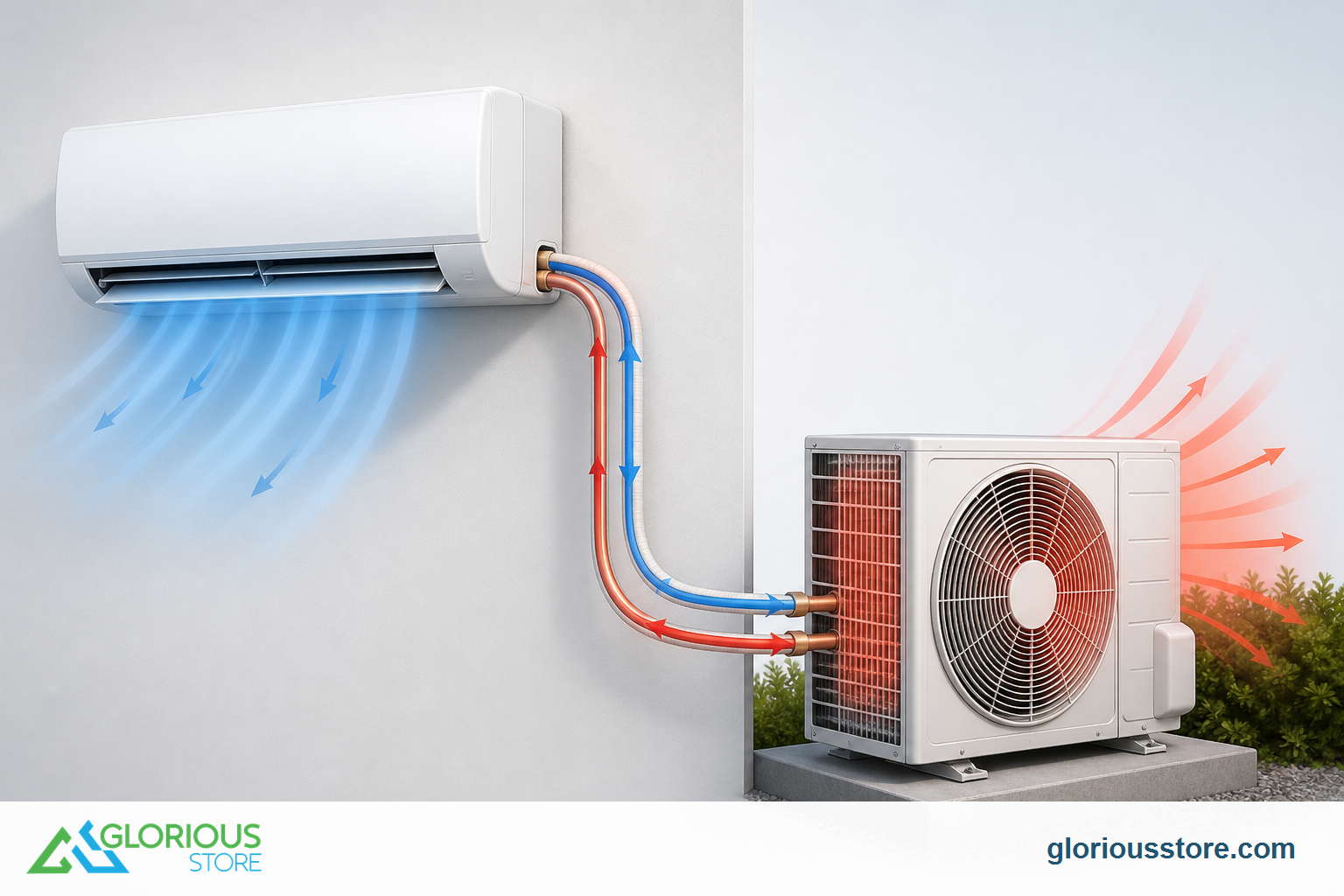
A split AC moves heat rather than creating cold. Refrigerant circulates through a sealed circuit between the indoor evaporator and outdoor condenser. As pressure and temperature change, it absorbs heat indoors and releases it outside. The compressor, expansion device, coils, fans, controls, and correctly prepared copper lines all have to work together.
Refrigerant is not a fuel that a healthy system should routinely consume. If a technician says the unit needs gas, ask why the charge is low and how the cause will be found. The U.S. Environmental Protection Agency’s current homeowner refrigerant guidance advises locating and repairing a leak instead of repeatedly topping off a leaking system. Local rules and technician-qualification systems differ, but the underlying diagnostic principle is useful in the UAE, Middle East, Europe, and Africa.
Find the Refrigerant Type—Do Not Guess
Look for the outdoor unit’s nameplate and the installation manual. The label normally identifies the refrigerant designation and factory charge, along with electrical data and model information. Photograph the label before installation and keep the image with the invoice and warranty documents.
Do not infer the refrigerant from capacity, inverter marketing, cabinet shape, color, or a different model in the same range. R22, R410A, R32, and other refrigerants are not interchangeable labels for the same substance. They can require different pressures, oils, components, tools, procedures, and safety controls. A replacement refrigerant should never be selected from an online comment or a cylinder color alone.
If the product page does not state the refrigerant, ask the seller or installer to confirm it from the exact retail unit before work begins. That is the responsible position for the current StarSat AC listing discussed below: its live page confirms capacity and operating modes but does not publish a refrigerant type, so this article does not invent one.
Possible Leak or Charge Problems
Weak cooling does not automatically prove a refrigerant leak. A dirty filter, blocked airflow, incorrect mode, open doors, extreme solar heat, wrong capacity, coil contamination, sensor fault, fan problem, installation error, or electrical issue can produce similar symptoms. Start with safe user checks: confirm Cool mode, a sensible set point, a clean user-serviceable filter, unobstructed airflow, closed windows, and enough operating time.
Arrange a professional inspection if you notice one or more of these signs:
- Cooling has declined after the system previously worked normally.
- Ice appears on accessible pipework or the indoor coil area.
- Oily residue is visible near a connection.
- A new hissing or bubbling sound persists.
- The unit runs for unusually long periods without reaching the set temperature.
- A previous “gas refill” improved cooling only temporarily.
- The installer reports low pressure but has not explained the diagnostic method.
These are clues, not a remote diagnosis. Turn the system off and seek urgent help if there is smoke, a burning smell, exposed wiring, repeated breaker trips, or water reaching electrical parts.
Seven Questions to Ask the Installer
UNEP OzonAction emphasizes technician skills in leak detection, safe refrigerant handling, recovery, evacuation, charging, pipe fabrication, and safety. Its Refrigerant Driving License initiative is an international competency framework; it does not replace UAE requirements, manufacturer authorization, or building rules. Ask the installer for the locally relevant qualification and experience with the exact refrigerant and equipment type.
| Ask before work starts | A useful answer should identify |
|---|---|
| What refrigerant and factory charge does this exact unit use? | The nameplate/manual value, not a guess based on model size |
| Is the existing copper line suitable? | Diameter, condition, length, insulation, contamination risk, and manufacturer limits |
| How will the system be leak-tested? | A defined test method and acceptance check before charging or opening service valves |
| How will the line be evacuated? | Appropriate vacuum equipment, measurement, and a method that follows the manufacturer’s procedure |
| Will refrigerant be recovered rather than released? | Suitable recovery equipment and lawful handling/disposal arrangements |
| How will the final charge be established? | Factory instructions, line length, and measured quantity where adjustment is required |
| What records will I receive? | Model/serial details, refrigerant, work performed, installer, date, warranty, and commissioning results |
Do not direct a technician’s step-by-step work from a blog. The goal is to hear a clear, model-specific plan and to avoid vague promises such as “all split ACs use the same gas.”
Repair the Cause, Not Only the Symptom
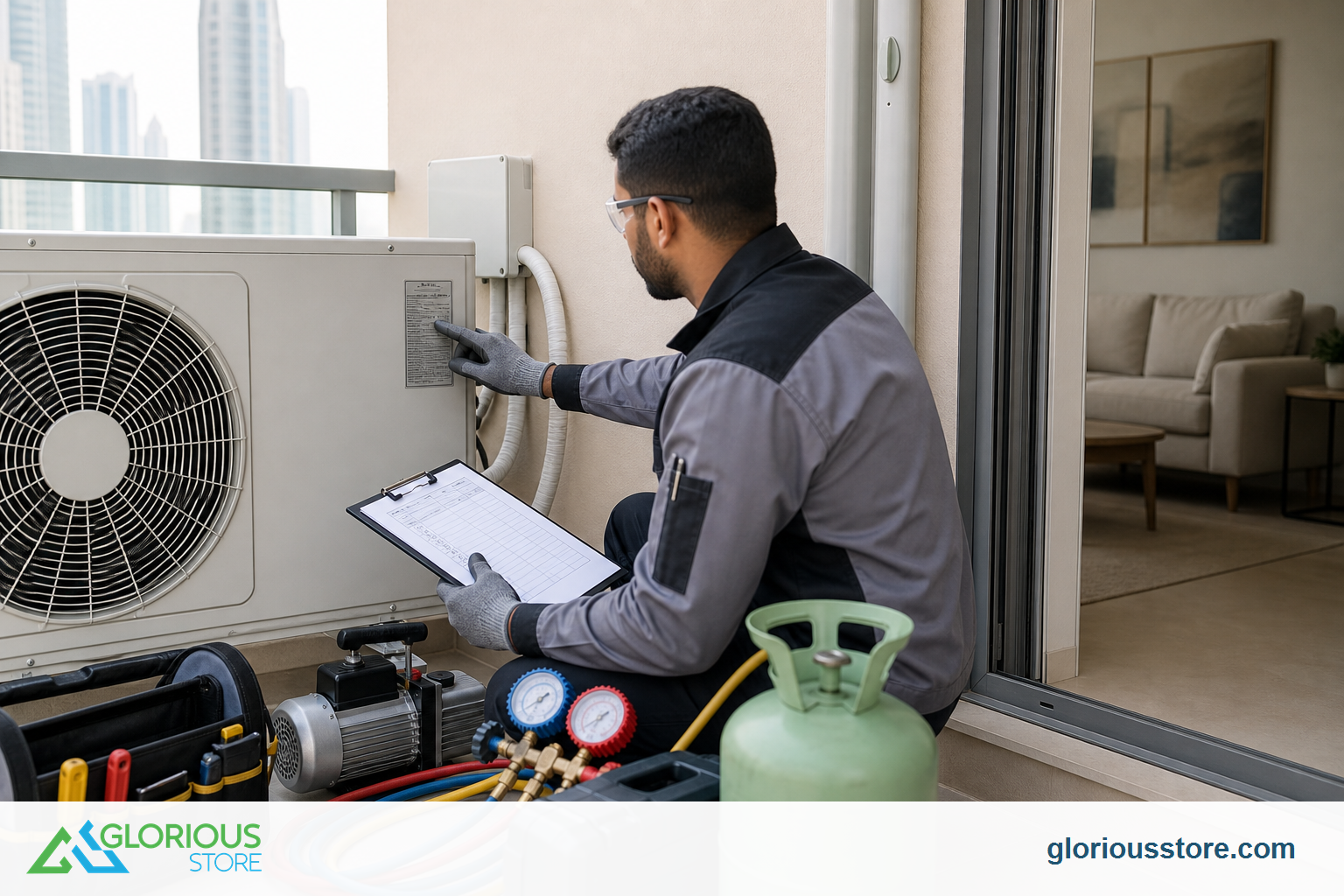
Adding refrigerant without addressing a leak can create another service call and release more gas. Ask for the suspected leak point, the repair performed, and the post-repair test result. If a major component, old pipe run, or mismatched indoor/outdoor unit is involved, request a written comparison of repair and replacement options.
Never approve mixing refrigerants or a retrofit without written manufacturer-compatible guidance. A unit generally performs best with the refrigerant and components for which it was designed. Conversion can affect oil compatibility, capacity, controls, seals, pressure, safety classification, and warranty.
For replacement, treat the indoor unit, outdoor unit, expansion device, pipe sizes, controls, and installation requirements as one matched system. Reusing concealed pipework may be possible in some projects, but only after the installer confirms compatibility and condition for the exact model. “The old pipes look fine” is not a complete assessment.
A UAE Pre-Purchase Checklist
Before ordering a wall-mounted split AC, collect these answers:
- Confirm capacity with a room heat-load assessment, not floor area alone.
- Verify cooling-only versus cooling-and-heating operation.
- Check indoor and outdoor dimensions, clearances, drainage, and service access.
- Confirm electrical supply, isolator, and building or landlord requirements.
- Read the exact refrigerant and factory charge from the retail unit or manual.
- Confirm whether pipes, brackets, drain, cabling, core drilling, lifting, and commissioning are included.
- Ask who provides installation, warranty support, leak diagnosis, recovery, and end-of-life disposal.
- Keep label photos, serial numbers, invoice, warranty terms, and commissioning record.
Capacity answers “how much cooling,” while refrigerant and commissioning questions address “how the selected system is installed and serviced.” Use a qualified heat-load assessment for sizing. For day-to-day operation, see the separate guide to AC Dry mode vs Cool mode in UAE humidity.
Current Glorious Store AC Availability
Stock was rechecked on September 3, 2026. The StarSat 9000 Btu/h Inverter Air Conditioner showed 10 in stock with Add to Cart. Its page lists 9,000 Btu/h cooling and heating, an inverter compressor, a wall-mounted indoor unit, and published indoor/outdoor dimensions.
The listing does not specify refrigerant type, energy-label values, line-set limits, electrical requirements, included installation materials, or warranty scope. Confirm those details before purchase. The model may be worth considering only after a qualified heat-load assessment shows that 9,000 Btu/h suits the room.
The 12,000, 18,000, and 24,000 Btu/h StarSat product pages were marked out of stock during the same check, so they are not recommended here as currently purchasable options. Browse the live air-conditioner collection or contact Glorious Store for current availability and model-specific installation information.
Why World Ozone Day Matters to AC Owners
The United Nations explains that the Montreal Protocol controls ozone-depleting substances and that the Kigali Amendment addresses the phasedown of hydrofluorocarbons, many of which have high global-warming potential. Not every modern refrigerant depletes ozone, but leaks can still carry climate, safety, legal, and cost consequences depending on the substance and jurisdiction.
The homeowner’s role is straightforward: buy a correctly matched system, keep its records, use a trained installer, repair leaks, and insist on responsible recovery rather than deliberate release. Those actions are more credible than choosing equipment from a vague “eco gas” claim with no nameplate evidence.
Frequently Asked Questions
How do I know which refrigerant my AC uses?
Check the outdoor-unit nameplate and the exact model’s manual. If the label is missing or unreadable, contact the manufacturer, seller, or qualified service company. Do not guess from BTU capacity or cabinet appearance.
Does an air conditioner need refrigerant every year?
Not as a normal consumable. Refrigerant circulates in a sealed system. If the charge is low, ask the technician to find and repair the cause rather than scheduling automatic annual top-ups.
Can R32 and R410A be mixed?
Do not mix refrigerants or authorize substitutions without explicit manufacturer-compatible technical guidance. Different refrigerants and systems can use different pressures, oils, components, procedures, and safety precautions.
Is weak cooling always caused by low gas?
No. Airflow restriction, dirty components, wrong settings, high room load, poor sizing, fan or sensor faults, and installation problems can imitate a refrigerant issue. A technician should diagnose the system rather than rely on one symptom.
What should I save after installation?
Keep photographs of model and refrigerant labels, serial numbers, invoice, warranty, installer details, pipe-route notes, work performed, commissioning results, and any measured refrigerant addition permitted by the manufacturer.
Choose the System and the Service Together
A good AC purchase is a matched package: suitable capacity, verified refrigerant information, correct site preparation, competent installation, documented commissioning, and support after the sale. Check the live 9,000 Btu/h listing, request the missing model-specific details, and arrange a qualified assessment before committing.
That approach protects comfort, equipment, and the environment—and it turns the 2026 World Ozone Day message into a practical decision for UAE homes.





Leave a comment